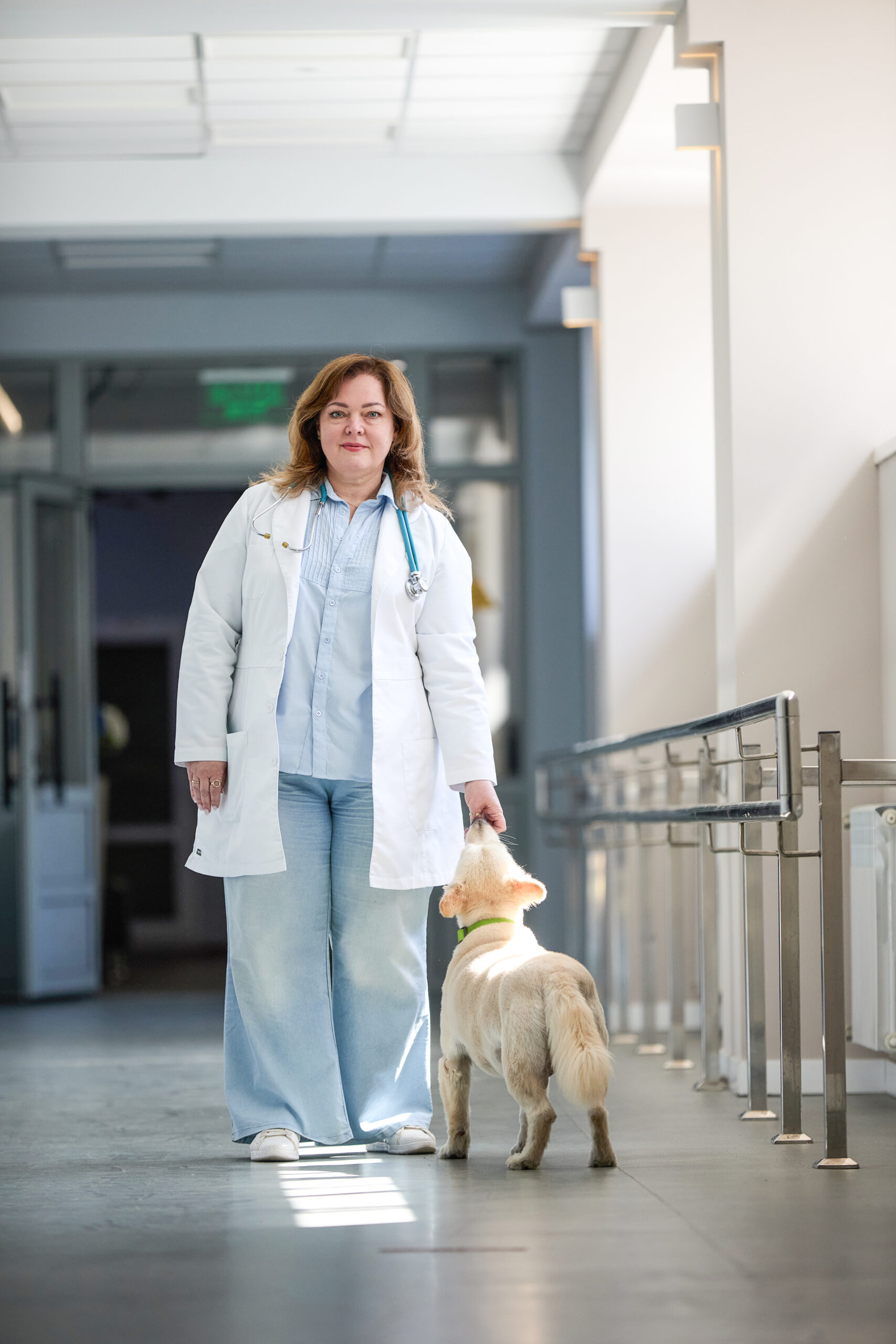
Alla Pivnyk
Head of the Rehabilitation Department at the Centre of Excellence, Physical and Rehabilitation Medicine Physician, Dnipro
In 2019, Alla Pivnyk became one of the first specialists in Physical and Rehabilitation Medicine in Dnipropetrovsk Oblast. Today, she leads the Rehabilitation Department at the Centre of Excellence in Dnipro, which has become a training hub for dozens of multidisciplinary rehabilitation teams from across Ukraine. WHO in Ukraine is supporting the development of Centres of Excellence in different regions. Here, health professionals learn to work collaboratively, strengthen their rehabilitation skills, improve wheelchair service provision, and promote principles of accessible housing. Most importantly, they gain the knowledge and practical experience needed to help people regain independence and rebuild their lives, even in times of war.

I always knew I would be a doctor. I clearly realized that treatment with medication does not lead to a person being able to live independently. And it was a long journey to get into rehabilitation.
In fact, I am a doctor of one of the most modern medical professions that have appeared in the country — my profession appeared in the classification of professions in 2016.
My workday — and you have to understand that I am the head of a center of excellence — is so diverse every day that this work cannot be structured and controlled in the usual way, because it is clinical practice, it is working with a team, and every day brings new challenges.
A team leader is not the one who is in front; it is the one who facilitates from behind. This is because each rehabilitation profession is autonomous and must be strong in a professional sense.
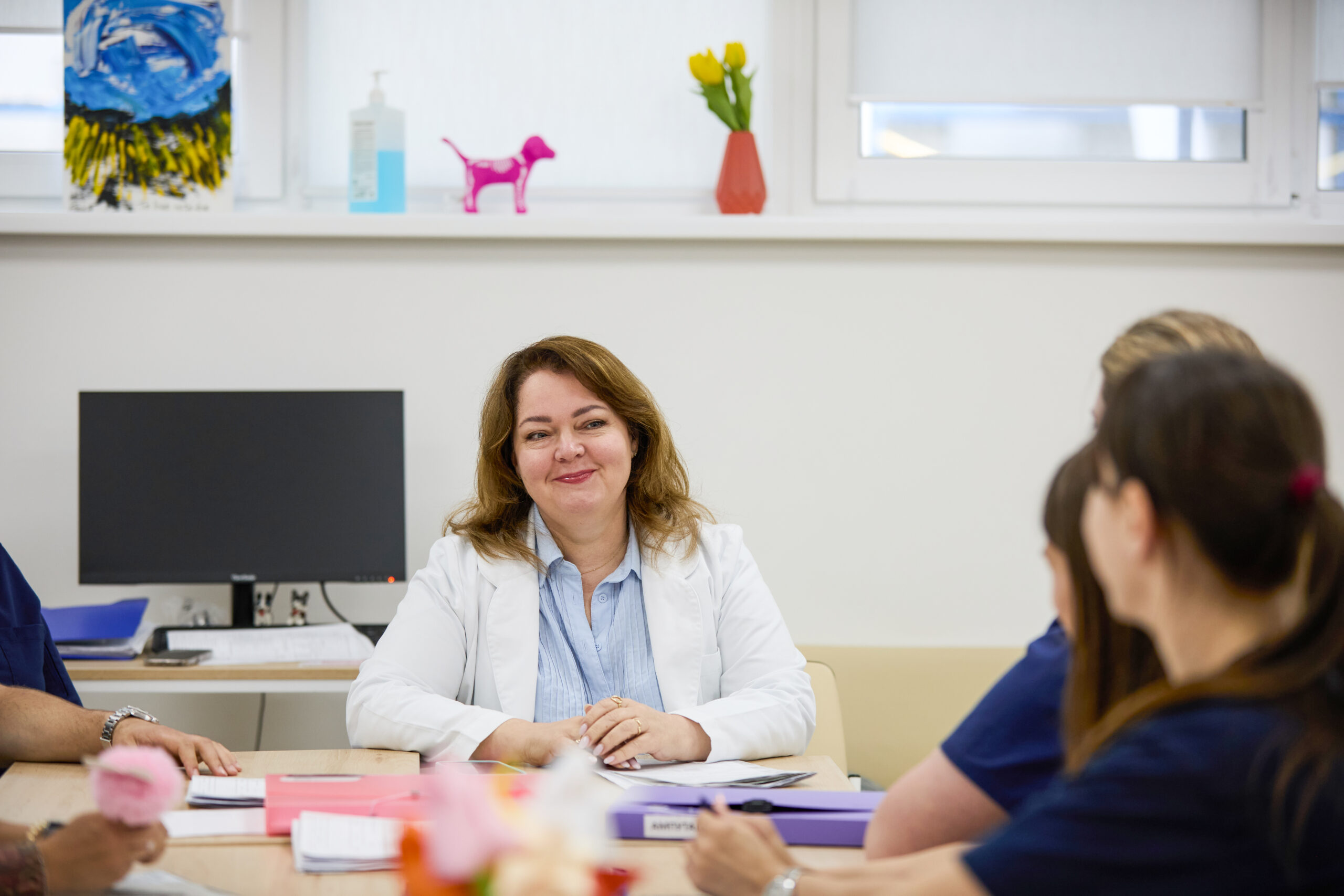
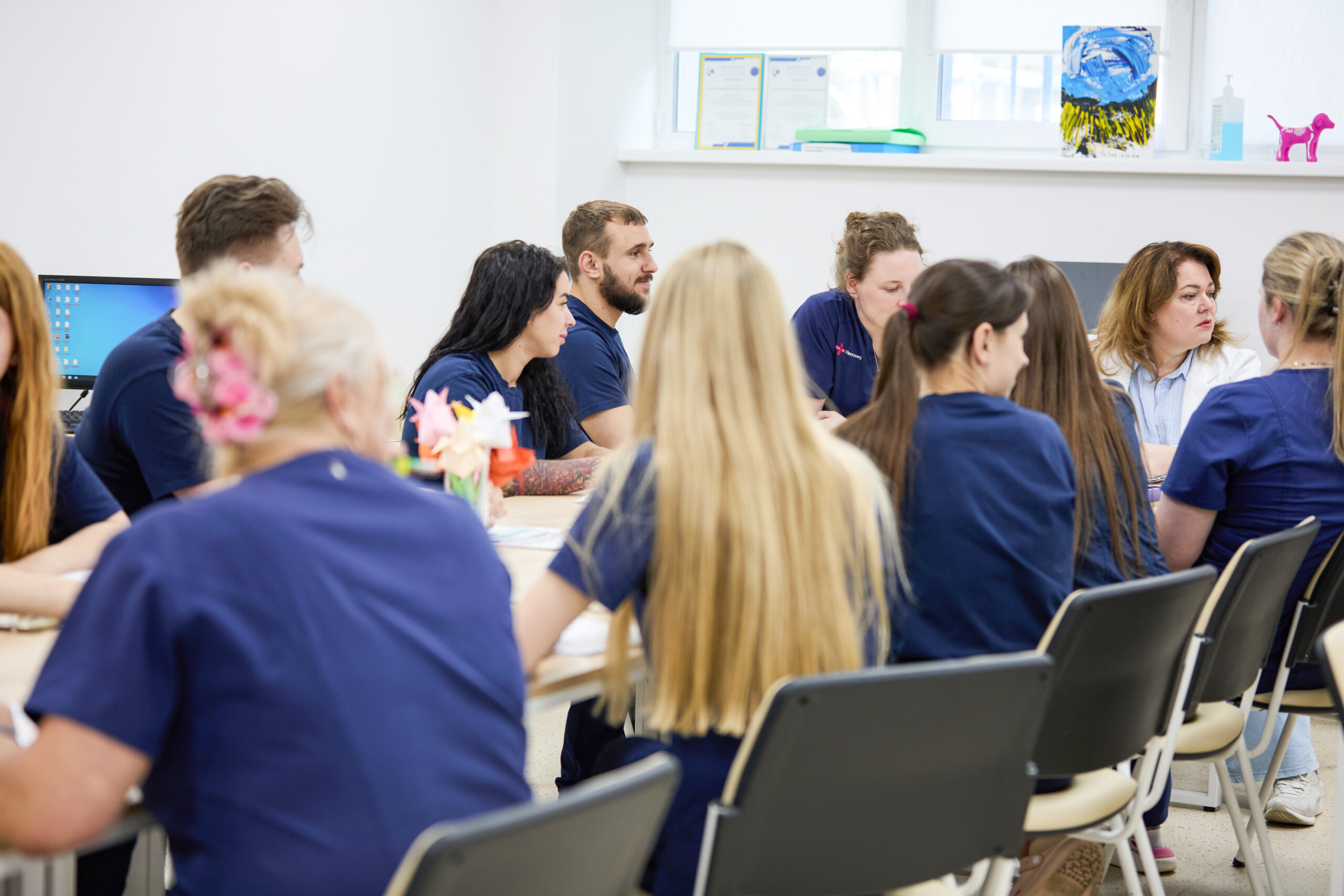
The standard for providing rehabilitation care in Ukraine today is exactly the work of a multidisciplinary team — this is when specialists from various autonomous rehabilitation professions gather and work as a team.
Every member of a multidisciplinary team is an equal entity working with the patient. We have reached the level where we are ready to pass on our knowledge and have the opportunity to build an entire system. Honestly, that’s really cool.
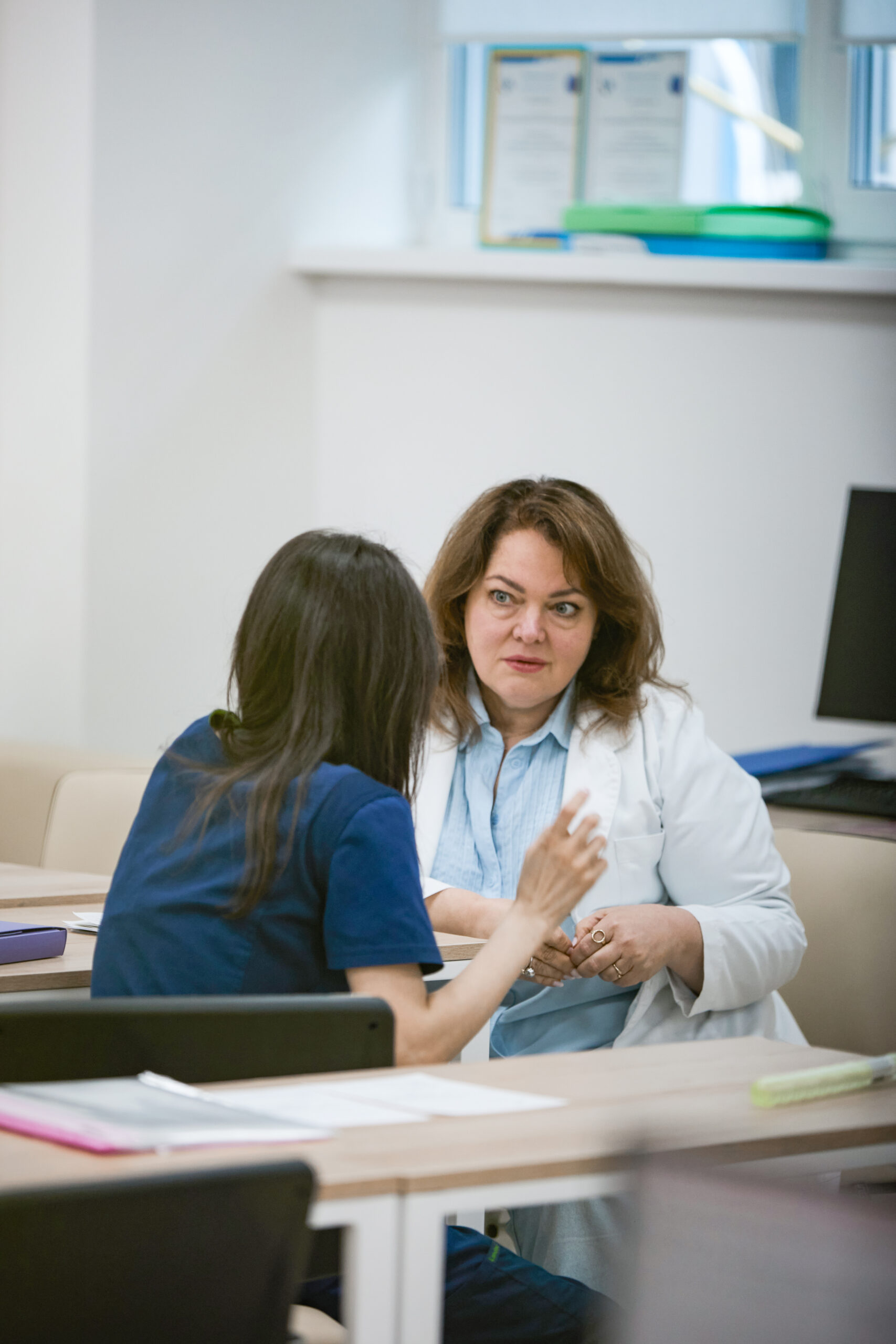
Our task is to build a team from the people who come to us, show how harmoniously our team already works. As a result of the project we are carrying out, they identify their weaknesses and strengths and plan how they will develop their rehabilitation departments. Those who have been with us still have open groups, and we communicate periodically — when they have questions, we continue to be their mentors, even years later.
This is how a community is formed, and this community is formed thanks to the support of the WHO. We are infinitely grateful for this support, because at the highest level, it is not always visible what is happening with each team in every healthcare facility.
In fact, it is an industry that is developing at a catastrophic pace due to the challenges of the war, in conditions where we are just forming our standards and guidelines, but we are forming them in a completely new way.
It is understood that there are still many challenges ahead that the system will face — this includes the integration of patients into life, where we will professionally help them find new professions, it includes simulation training centers, it includes new spaces that we desperately need. Therefore, there are so many plans that I am even afraid to talk about them.
The story of Alla Pivnyk
Alla Pivnyk — Head of the Rehabilitation Department at the Centre of Excellence and a Physical and Rehabilitation Medicine physician in Dnipro.
“I always knew I would become a doctor,” Alla says of her career choice.
In 2019, she became one of the first Physical and Rehabilitation Medicine physicians in Dnipropetrovsk Oblast — a profession that had only been officially established in Ukraine ten years earlier.
Today, Alla heads the Rehabilitation Department at the Centre of Excellence, which has become a major platform for advancing rehabilitation in Ukraine. Alla is convinced that the future of rehabilitation lies in multidisciplinary teams, where every specialist representing an independent rehabilitation profession is an equal member of the team.
The Centre of Excellence, where Alla heads the Rehabilitation Department, is being developed with the support of WHO Ukraine and has become a training hub for dozens of multidisciplinary teams from across Ukraine. Specialists who come here observe the work of the multidisciplinary team in Dnipro, take part in professional training and practical sessions, and develop plans for the further development of rehabilitation departments at their own facilities.
“We continue to mentor them, even years after they have completed their training.”
According to Alla Pivnyk, this is how an entire professional community is gradually taking shape. The support provided by WHO Ukraine, she says, has helped make this work — at the level of individual teams and healthcare facilities — visible and systematic.
There are ambitious plans ahead, accompanied by equally significant challenges: developing simulation-based training centres, expanding the department, and creating additional space for its work. The war has been a major test for the sector, but also a powerful impetus for its development. New standards and approaches are being shaped right now — in response to people’s real needs and the challenges of the times.