Andrii Shcherbatskyi
Occupational Therapy Assistant, Social Worker, and Active Rehabilitation Instructor
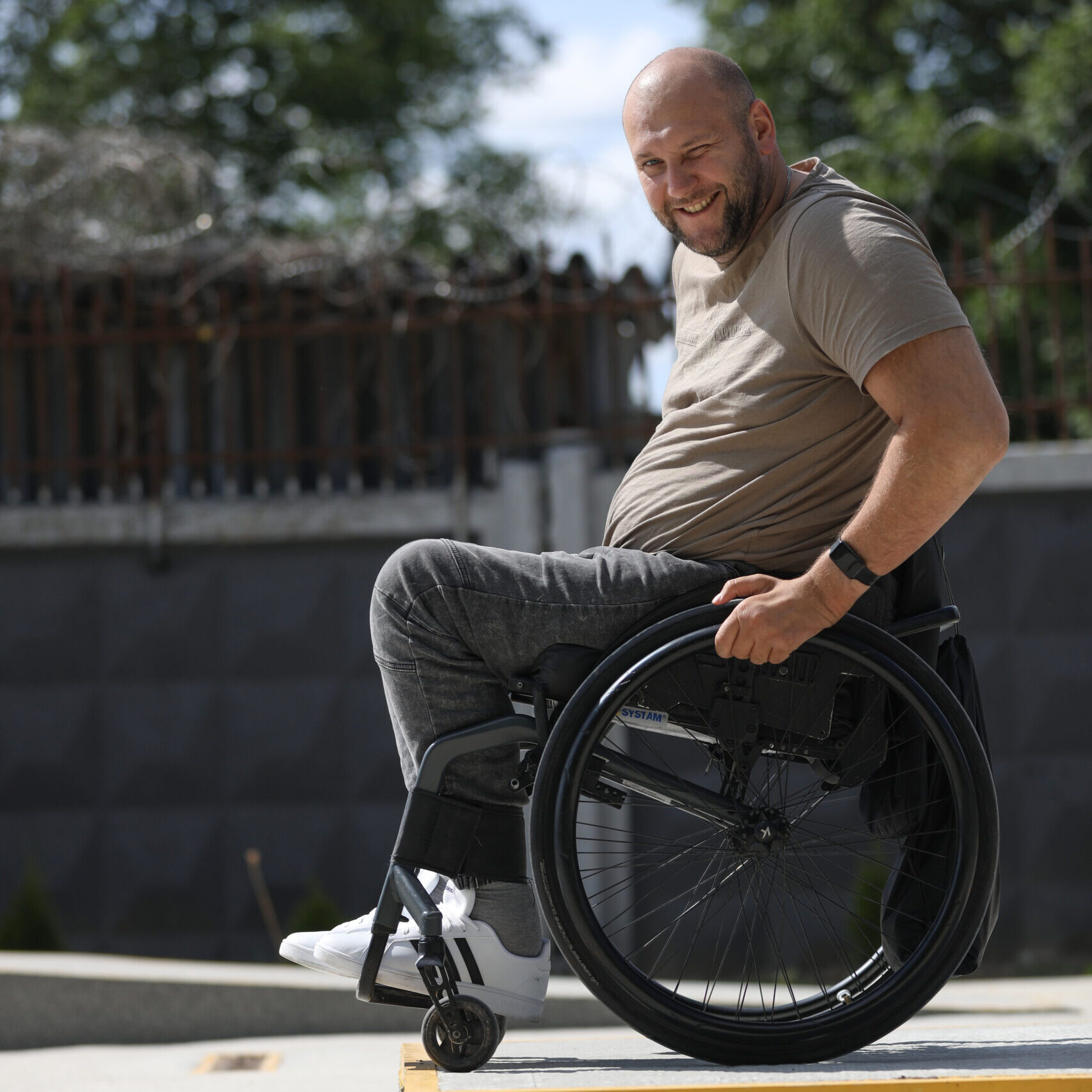
Andrii spent nine months in intensive care after his injury. He could not even lift a spoon and was fed through a feeding tube. Yet it was there that he dreamed of one day driving a car. Ten years later, he earned his driver’s licence. Today, Andrii is a wheelchair user himself and, after completing WHO training, helps others develop wheelchair skills and gain confidence in using a wheelchair. He has travelled to Norway, Scotland, Italy, Georgia and many other countries, while fishing remains his greatest joy. His injury did not stop him — it became the starting point of a new life.

After my injury, my parents tried everything. Every treatment they heard about, every possible specialist — massage therapists, alternative remedies, anything that might help. They held on to every glimmer of hope.
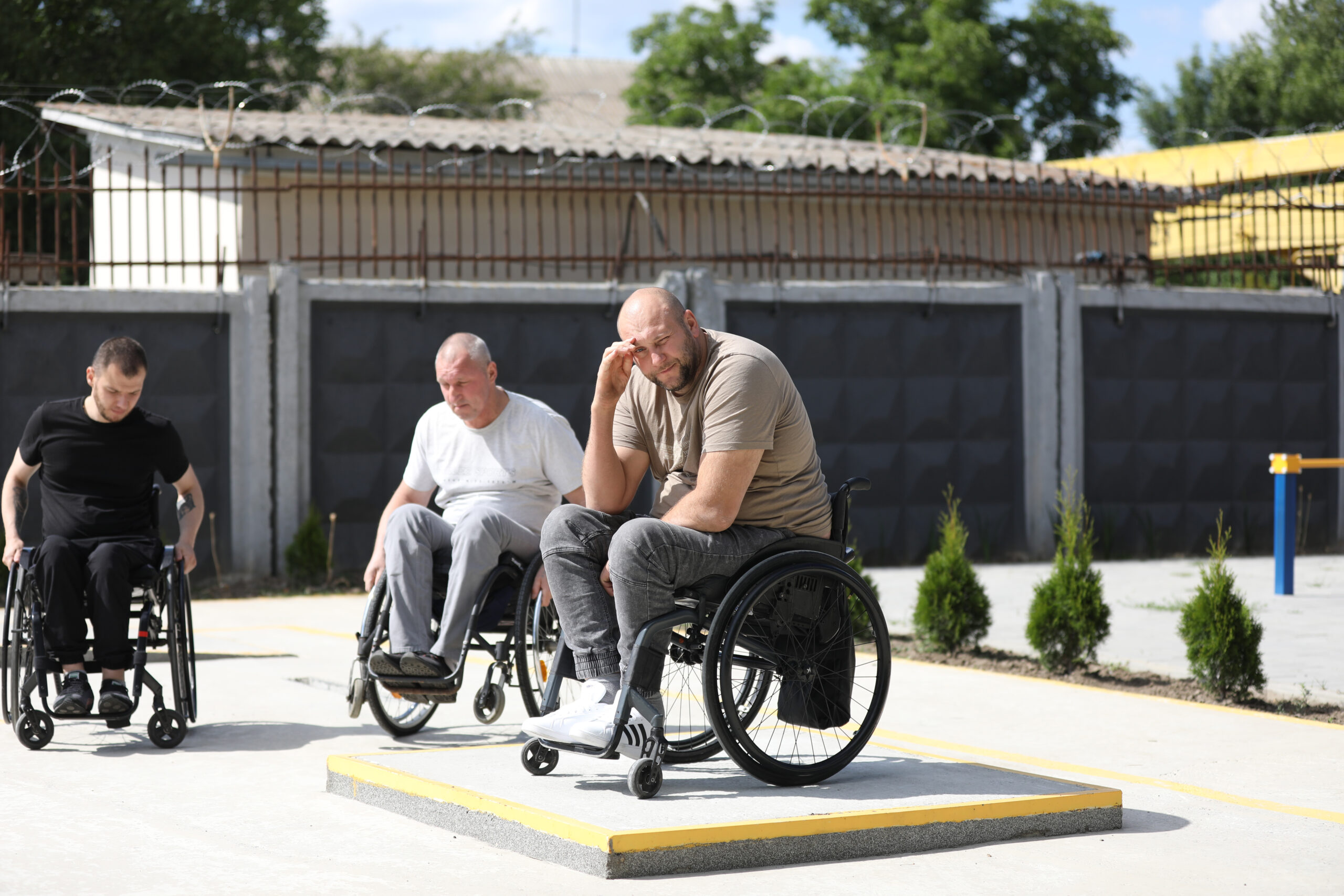
When someone first arrives at the hospital, they’re in the acute stage of recovery. They learn the essentials: how to use a wheelchair, how to transfer safely, how to manage everyday tasks.
But once they reach a certain level of independence, the goal changes. From that point on, it’s about maintaining your health through regular exercise —and getting on with your life: building a family, continuing your education, finding meaningful work.
My injury was severe. I spent nine months in intensive care. The first time I went outside, I was wrapped in blankets like a doll, I was being fed through a tube.
Those first months were incredibly difficult.
I dreamed of getting my driver’s license.
One day my neurosurgeon came into the ICU, and I asked him, “Dr. Oleksandr, when am I going to get better? I’m supposed to start driving school in two months.” He smiled and said, “You’d better start by learning to use a wheelchair.” And I’m like “Okay, okay”.
More than ten years later, I finally got my driver’s licence.
Life changes. Laws change. New opportunities appear.
Today, people with disabilities are no longer expected to simply collect a pension, buy medication, and stay at home.
Many of my friends are successful entrepreneurs, farmers, and business owners. They build companies, create products. In the end, it all comes down to the individual.
I remember one Friday evening. I came home from work, my wife was away at a conference, and I realised I was about to waste an entire weekend lying in bed. It was already ten o’clock at night. I jumped up, packed all my fishing gear, drove forty kilometres outside Vinnytsia, and spent the night by the water.
It’s physically demanding, but mentally, it’s where I truly recharge. Then I can spend the next day just sleeping it off, but it feels amazing.
I often use fishing as a rehabilitation tool. I take people out into nature — but with one condition: if they buy the food, prepare the firewood.
Because if someone defines themselves primarily by their disability, life can begin to shrink.
But if they see themselves first as a parent, an athlete, an entrepreneur, or simply a successful person,the disability stops defining who they are.
From my wheelchair, I’ve travelled across half the world — Norway, Scotland, Georgia, Armenia, Azerbaijan. A few years ago, my wife and I took a road trip to Italy just to sightsee and travel around.
So if there’s a will, there’s always a way.
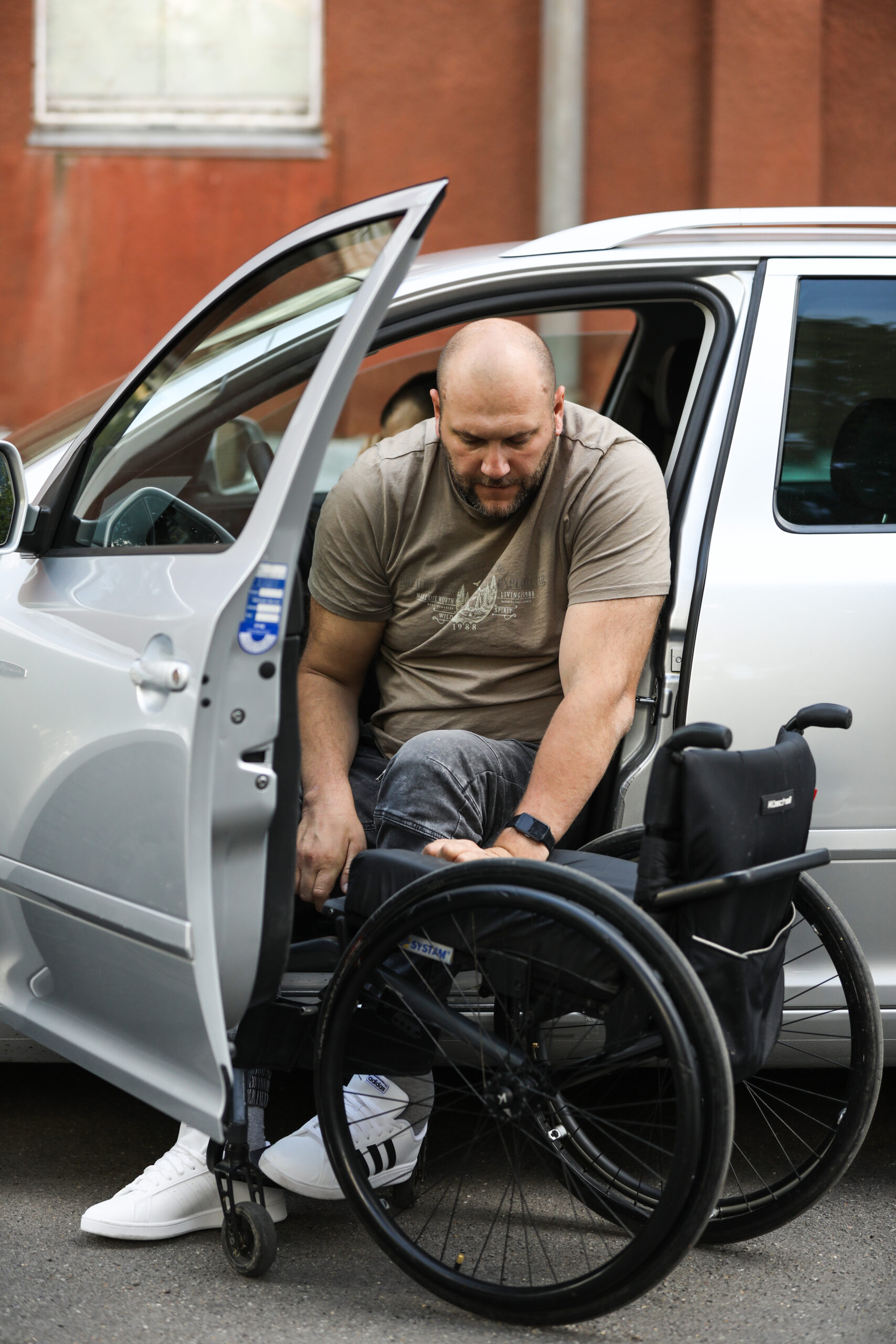
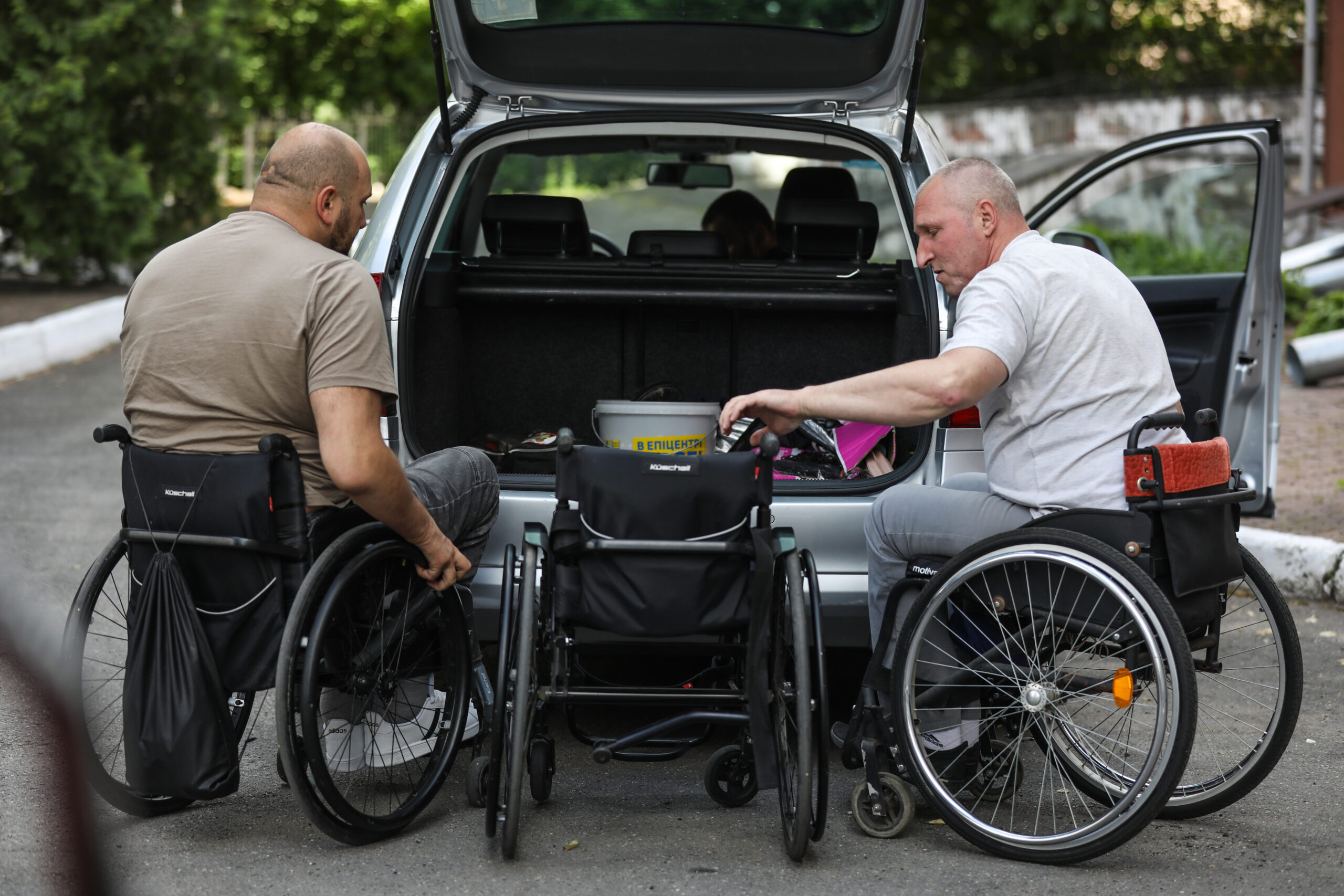
Whenever someone tells me they used to drive, I ask, “Do you still have your licence?”. If they do, I put them behind the wheel. And then, a month or two later, they’ve bought a car — or adapted the one they already own — and suddenly I can’t even find them in the rehabilitation unit because they’re out for coffee with their wife or driving her to a massage appointment.
That’s what brings me the greatest satisfaction: watching someone reclaim an ordinary, fulfilling life.
That’s why people like us exist. As peer mentors with lived experience, our job is to show others that life hasn’t ended—it’s only just beginning.
And it can still be vibrant, meaningful, and full of possibilities.
The Story of ANDRIY SHCHERBATSKY
Andrii is an occupational therapy assistant, social worker, and active rehabilitation instructor.
He spent nine months in intensive care following a severe injury. It was during that time that Andrii set himself a goal: to get behind the wheel. When he asked his neurosurgeon about it, the doctor simply advised him to sit in a wheelchair.
“It probably took more than ten years, but eventually I got my driving licence.”
Today, Andrii uses a wheelchair and, having completed training supported by WHO, teaches other people with disabilities active rehabilitation skills — from wheelchair mobility to building confidence behind the wheel.
“If a person sees themselves first and foremost as a successful person, a father, an athlete, or an entrepreneur, they don’t focus on their disability.”
Among his clients are successful business owners, farmers, and entrepreneurs who, just one or two months after starting training, are able to get behind the wheel and drive out for coffee or a day trip.
Fishing is something Andrii can decide to do even at ten o’clock on a Friday evening, simply because he does not want to waste a single moment of his life. He encourages the wheelchair users he trains to adopt the same attitude: never deny yourself the things you want to do. He takes his clients out into nature, helping them build independence — from buying groceries to gathering firewood.
Andrii does not use his wheelchair only for fishing. He has travelled across half the world, visiting Norway, Scotland, Italy, Georgia, Armenia, and Azerbaijan, proving to himself and others that nothing is impossible when you are truly determined to achieve what you want.
Andrii will continue his mission of showing new patients that an injury is not the end, but the beginning of a new life. And life can always be vibrant, fulfilling, and full of quality.