Oleksandra Sapozhnyk
Participant in the Supported Living Program
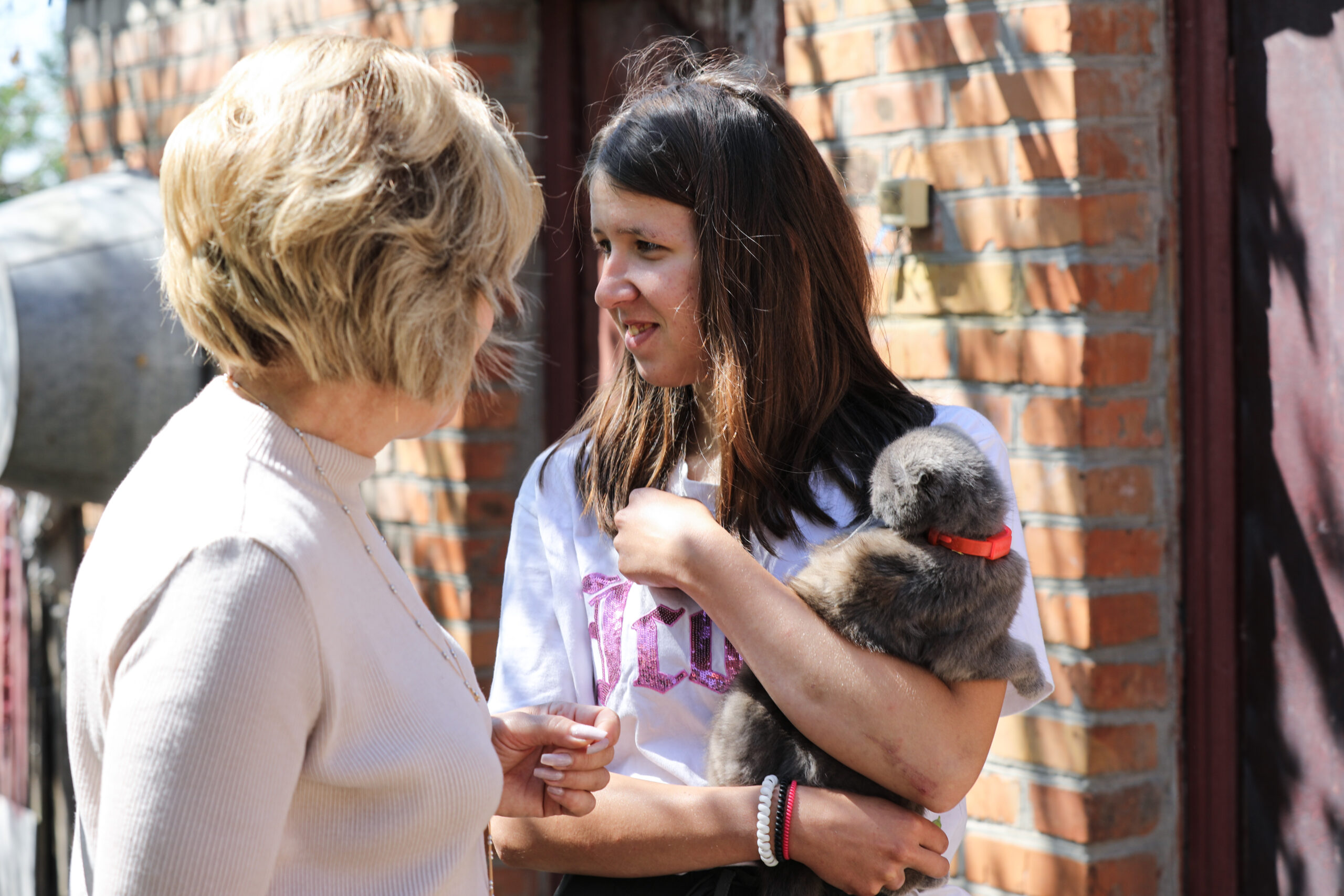
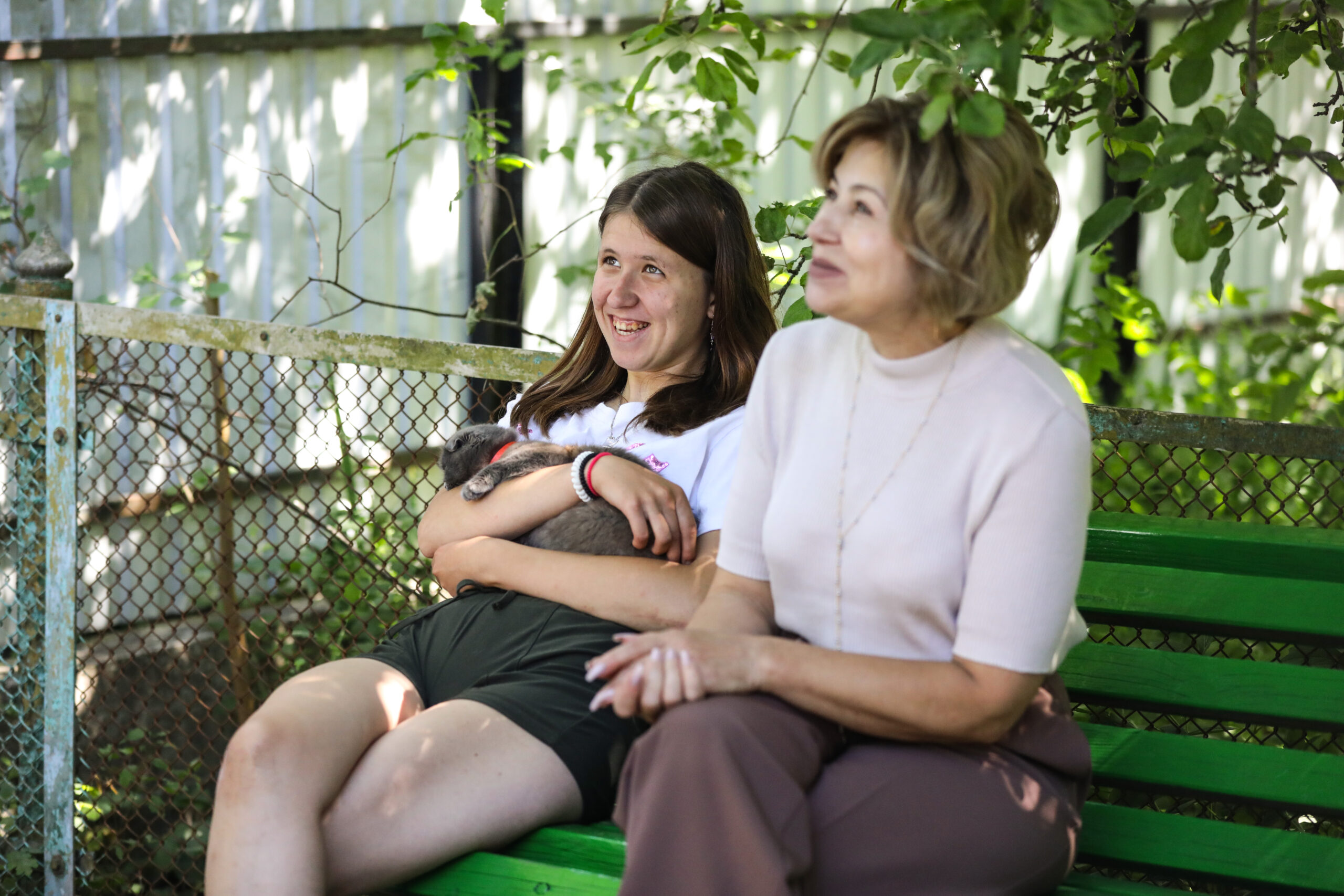
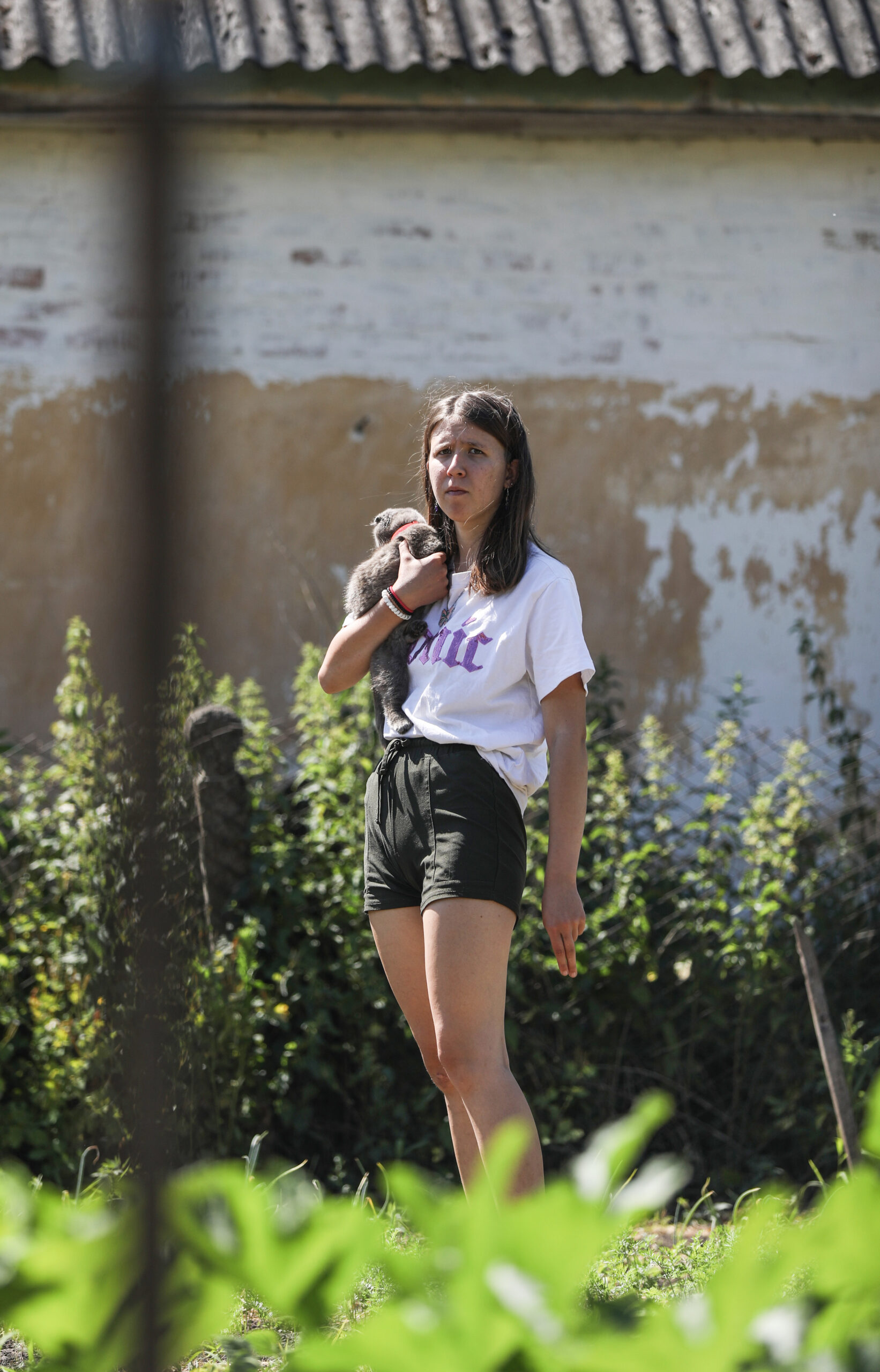
After her mother passed away, Oleksandra, a person with autism, was left an orphan. Through supported living at Kolping House, she learned the skills to live independently, while community support enabled her to remain in her own home rather than move to an institution. Today, Oleksandra is studying at university, tending her vegetable garden and orchard, and caring for her three cats. She dreams of finding a job. Community support has given her the opportunity to live independently and build her own future.

There are black currant bushes over there, and red currants too, and blueberries, but they haven’t grown yet. And it was also planted by my late father.
Over there, where the potatoes are, there are gooseberries.
The apricot froze in the frost this time.
I have three cats: the white one is Elsa, the grey tabby is Felix, and the fold-eared one you saw is Bella.
The World Health Organization serves as the coordinator of this service. We organized it, this service, specifically for our Oleksandra, who was left on her own an orphan with no living relatives.
The difference between how things were before and how they are now is huge.
Until I finish my studies, I would like to try working as a sales assistant or something, to make some money, socialize, and gain some experience.
I love watching science fiction. I love watching Harry Potter. Sometimes, just for the nostalgia, I’ll rewatch cartoons, like Winx.
I like cooking different sorts of dishes. I can make new potatoes with dill. And I can cook liver with vegetables and cream cheese.
It’s really delicious, try it.
When we start cooking, we try to follow the same sequence of steps, so that Sasha stays focused and does everything step by step. That’s why we work with her on improving her attention and following a sequence of steps.
And while we work, we’re developing her fine motor skills — which is very useful for her.
I want to replace the boiler. I also want to buy a new computer because my current one is acting up.
I can write poetry, but I haven’t done it in a long time.
She was whitewashing some areas over there. Today she said it needed to be done, so she did it herself.
She also planted a vegetable garden this year.
My goal is to help Sasha socialize, to teach her how to work and live independently.
We are heading towards this, we are striving for it, and I think that together we will succeed.
The Story of Oleksandra Sapozhnyk
Oleksandra is a participant in the supported living programme in the Kalynivka community.
Oleksandra has an intellectual disability. After her parents died, she was left an orphan and, without the support of her community, might have ended up in a residential institution — a fate that too often awaits people with intellectual disabilities who do not have family members nearby.
But in the Kalynivka community, a different path was found for Oleksandra. Last year, the community introduced a supported living service, developed with the involvement of Kolping. The concept is simple: a person lives in their own home, in their own community, with specialists nearby who help them develop the skills needed to manage everyday life. For Oleksandra, this support has meant more than simply being able to remain at home — it has given her the opportunity to build a life of her own.
“We taught her, helped her become part of the community — our girl who had been left an orphan,” says Nataliia Bachynska, director of the territorial social service centre.
Today, Oleksandra is the owner and homemaker of her own home, which, with the support she received, was legally registered in her and her sister’s names. She grows her own vegetables — this year, for the first time, she grew not only potatoes but almost a full range of garden produce. She cooks, cleans, bakes biscuits, and has even whitewashed part of the house herself.
Liudmyla, a social work specialist, says that Oleksandra’s independent life is being built gradually, through small but consistent steps:
“If you start moving towards a goal in small steps, it becomes achievable. You just need a lot of strength and patience, and you need to support and encourage the person.”
The next goal is to find Oleksandra a job suited to her abilities — initially part-time, so that she can get used to working with others and following a regular schedule, and eventually, perhaps, move to full-time employment.
“That is what we are working towards, and that is what we want. And I believe that, through our joint efforts, we will succeed,” Liudmyla says confidently.