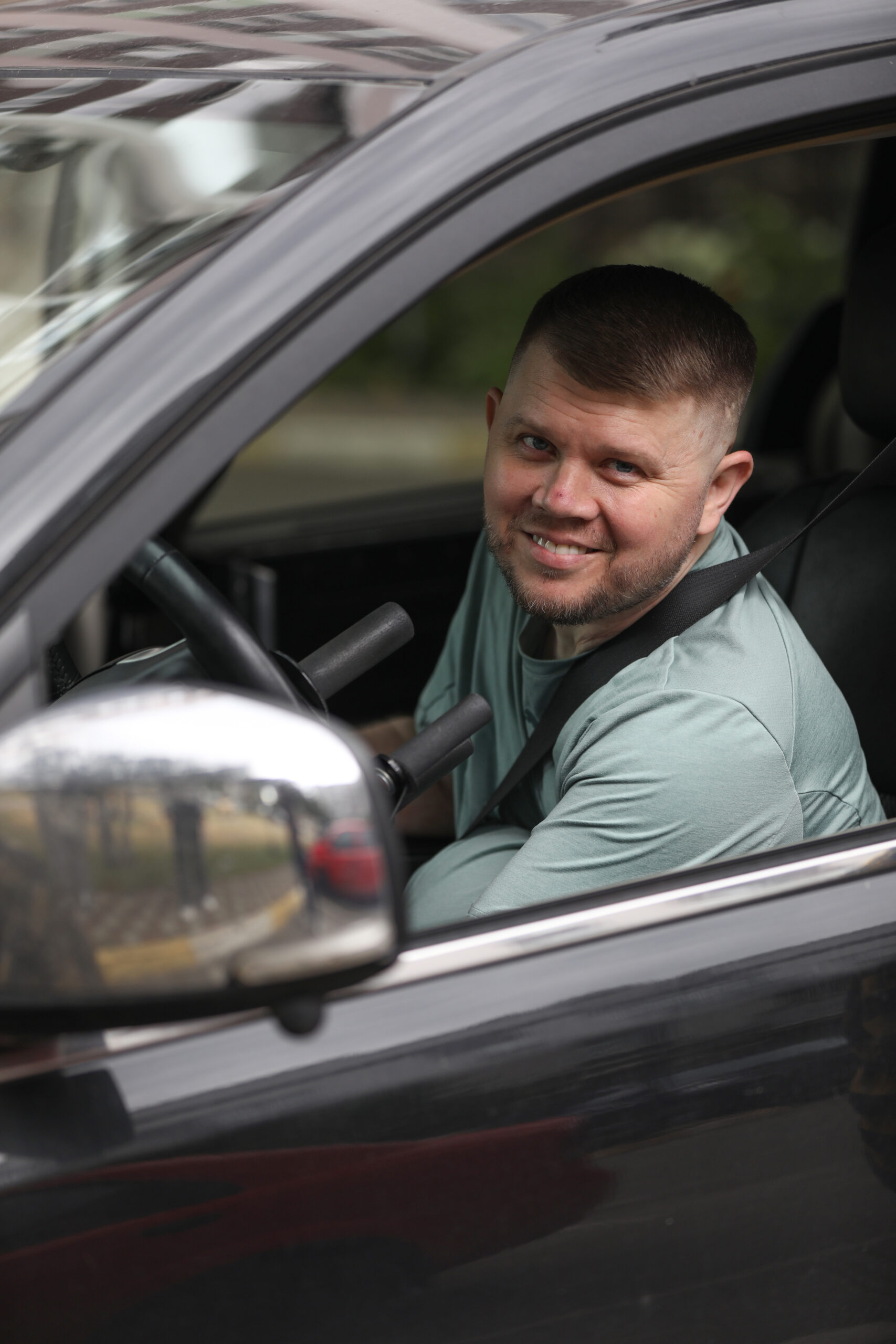
Vitalii Pcholkin
Executive Director of the Active Rehabilitation Group, barrier-free activist
After sustaining a spinal cord injury, Vitalii Pcholkin faced not only the consequences of his injury but also the many barriers created by society. When he was told that a person with his diagnosis could never drive a car, he refused to accept it. After nine years of persistence, his efforts led to legislative changes that opened the path for people with disabilities to obtain driver’s licences. Today, Vitalii is an occupational therapist and the head of the Active Rehabilitation Group, a non-governmental organization that helps thousands of people recovering from severe injuries regain their independence and confidence. Through his own example, he shows that the greatest barriers exist only in the way we perceive people’s potential.

There comes a moment when you realise that something you once dreamed about has quietly become your everyday reality. And sometimes life moves so fast that you don’t even notice it has happened.
I vividly remember living in an inaccessible apartment where I couldn’t even get out onto the balcony. Back then, all I wanted was to sit outside with a cup of coffee.
Years later, after moving into an accessible home, I found myself drinking coffee on my balcony when that memory suddenly came back to me.
It had become so normal that I hadn’t even realised a lifelong dream had already come true.
I used to live in Kyiv in an old Soviet-era apartment block that was full of barriers. My father and I explored every possible way to adapt it, but eventually we realised that no modification would ever give me true independence.
The better solution was to sell the apartment, invest in a new building, and make sure accessibility was built in from the very beginning. That decision changed everything.
In other words, at the time it was a hypothesis that was fully confirmed once construction on the house began.
While the building was still under construction, I started investigating every detail of the project.
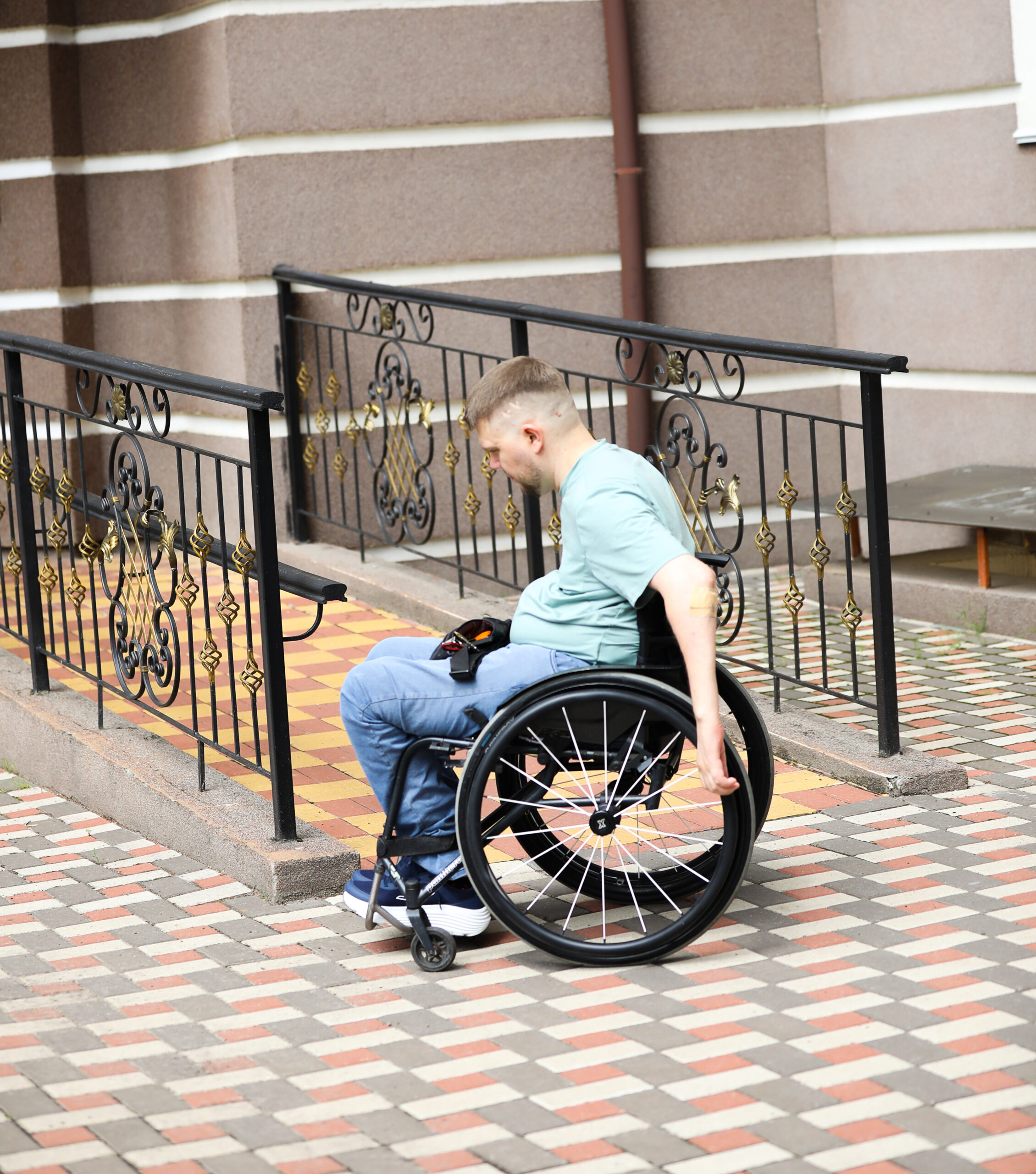
We visited a nearly identical development in Bucha and carried out an accessibility audit. It looked beautiful — but it was full of barriers.
When we first walked into our own building, we found the same problems. We had to raise the issue publicly. We involved the media, appealed to the mayor, and reached out to anyone who could help.
Eventually, the developer told us, “We’ll make one entrance accessible just for you.” We said, “No.” By then, we already had friends in the building. We wanted to visit our neighbours, and we knew other people with disabilities would live here too.
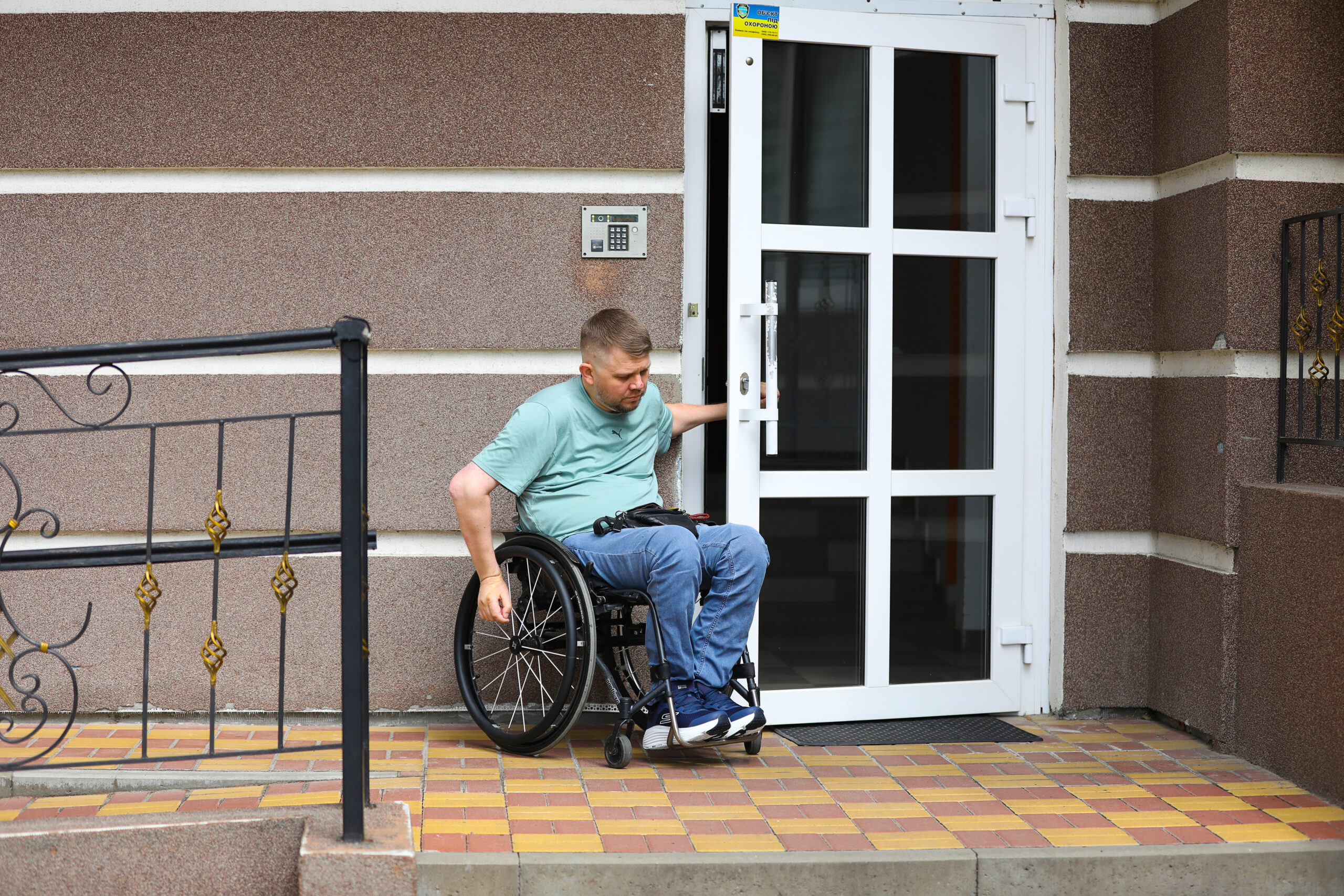
In the end, we succeeded in changing the entire project — every entrance, every ramp, and every commercial space in the building became fully accessible.
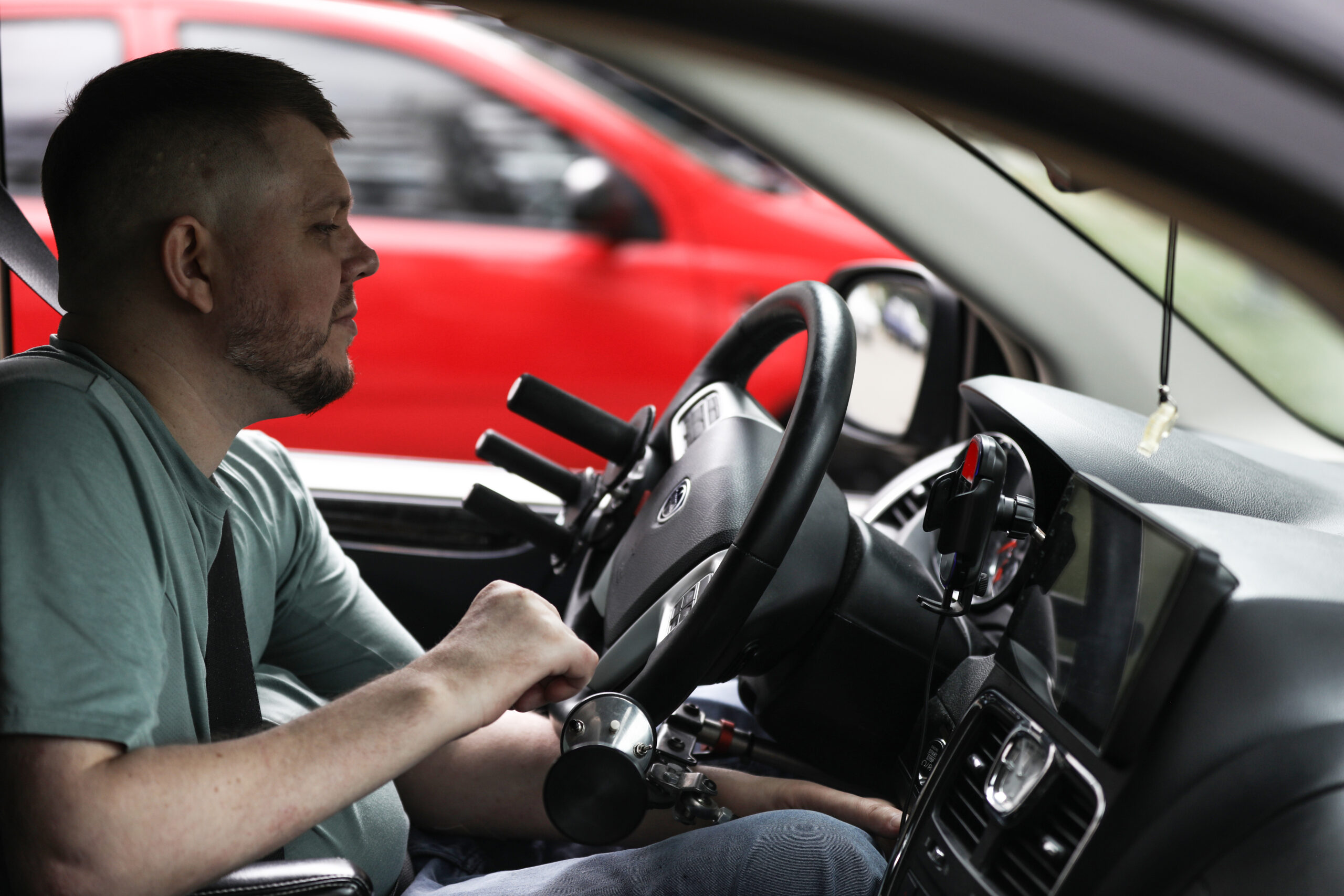
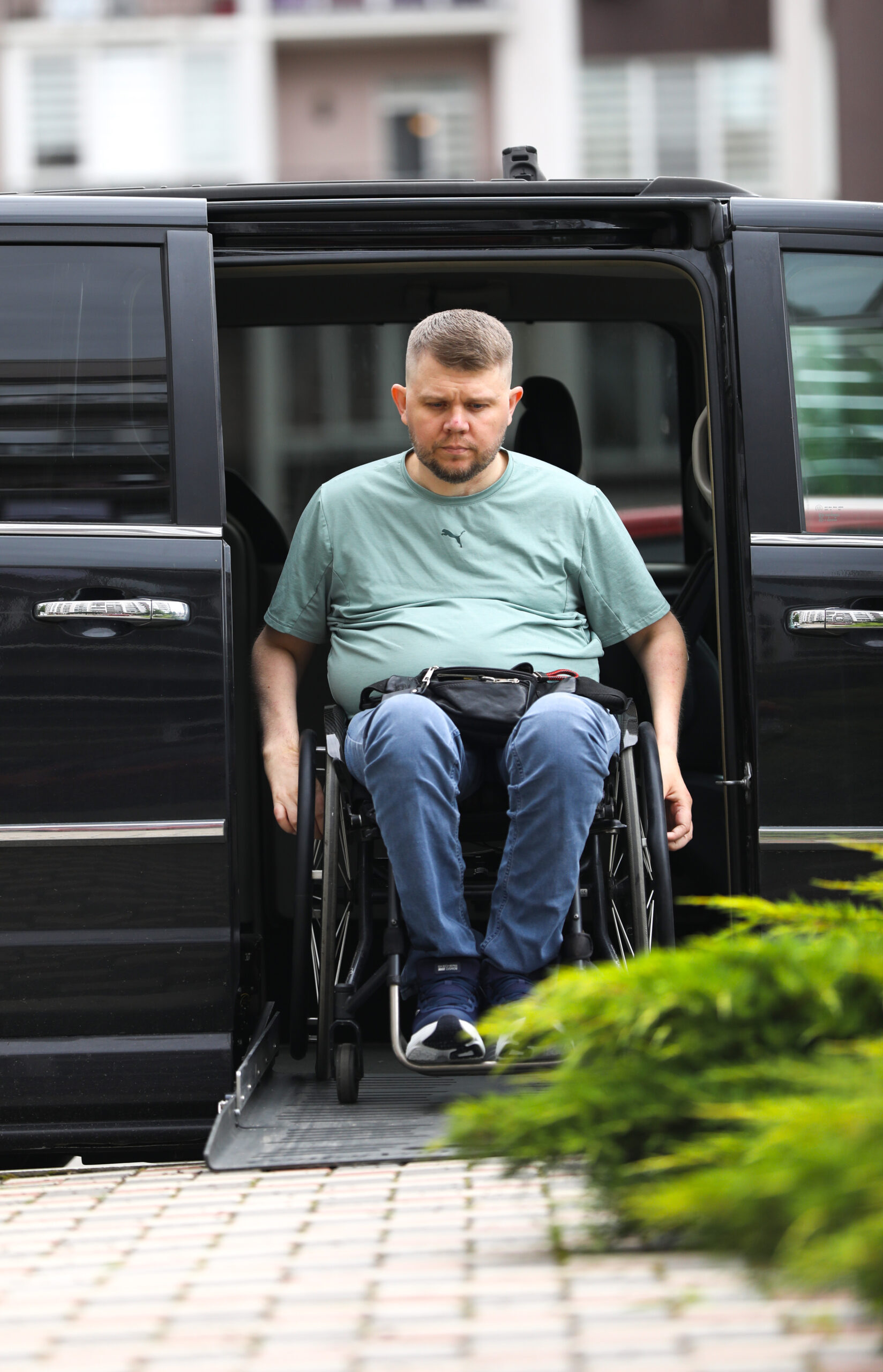
Then came driving. For years, I fought simply for the right to drive. Because of my medical diagnosis and limited hand function, I was automatically considered unfit to hold a driving licence.
We had to make a real breakthrough in the minds of even the doctors.Even doctors couldn’t imagine that driving might be possible. They looked at my hands and immediately said, “No. It’s impossible.”
That journey lasted nine years.
I first tried driving in 2011, but at the time it wasn’t my priority. By 2014, I decided to tackle the issue properly. I wanted to do it the right way. I wanted to understand where the system was failing and help change it.
The biggest obstacle was an outdated regulation issued by the Ministry of Health. It explicitly stated that people with my diagnosis (tetraplegia) were not allowed to drive. That regulation was the reason I was denied a licence. Changing that decision meant changing the law itself. I managed to convince the right people that the system needed reform.
The legislation was amended, the unnecessary restrictions were removed. And it went further, gaining a much larger scale.
Today, Ukraine has a growing network of accessible driving schools. Just a few days ago, I saw their latest report: more than 400 people have completed the programme over the past two years. That’s real progress.
We simply cannot afford to create new barriers. Everything we build, renovate, or rebuild must be accessible by design — not as an afterthought, but as the default.
The support of the World Health Organization has been invaluable — not only for our organisation, but for Ukraine as a whole.
I follow this work closely, contribute wherever I can, and encourage other leaders to become part of the process as well.
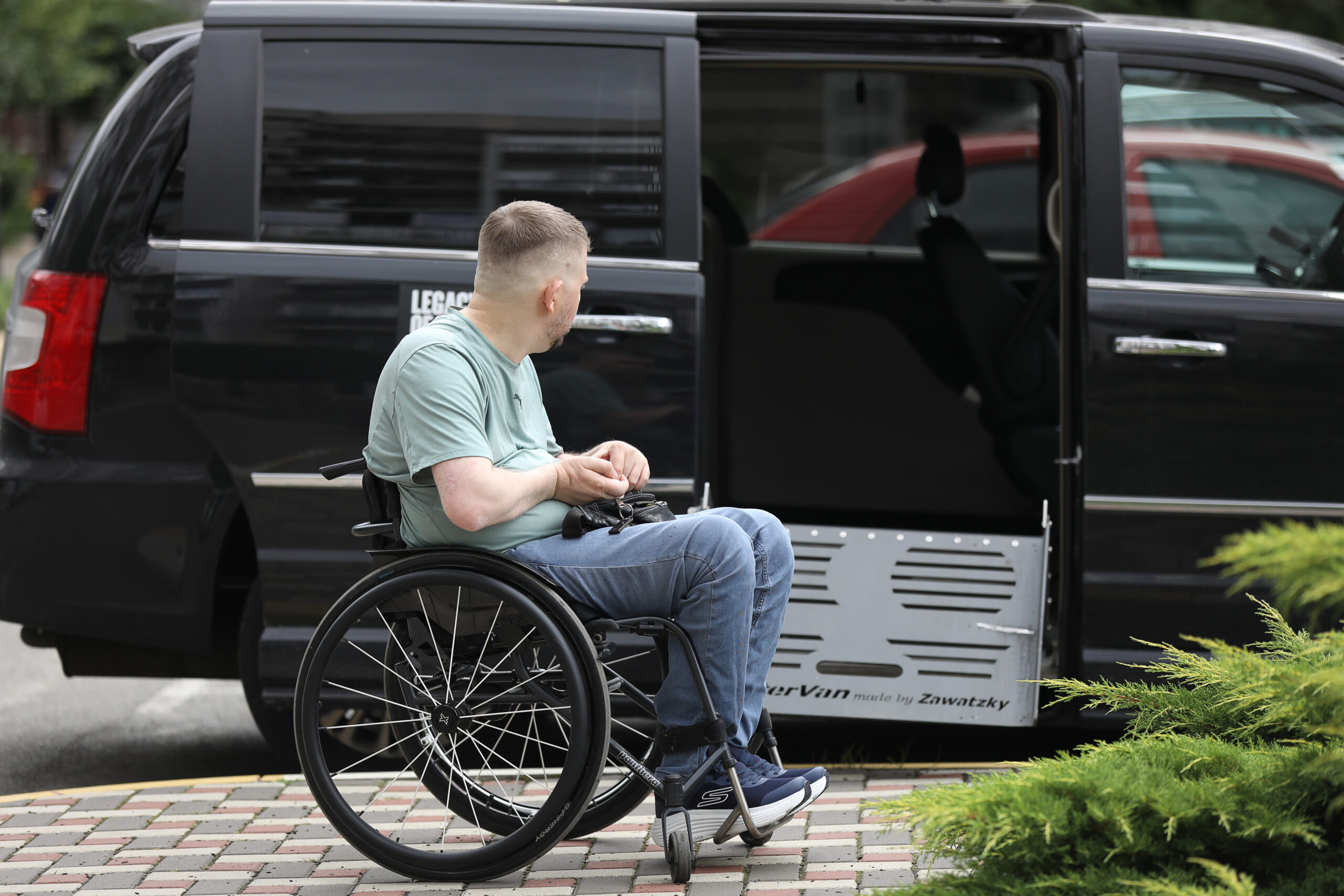
Using a wheelchair is not about giving up, it’s about choosing to live. A properly fitted wheelchair gives you freedom. You can do whatever you want. It gives you the mobility to pursue rehabilitation if you choose — but, more importantly, it gives you the freedom to participate in life on your own terms.
The Story of Vitalii Pcholkin
Vitalii is the Executive Director of the NGO Active Rehabilitation Group (ARG) and the creator of the “Invafishky” project.
Almost twenty years ago, following a severe injury, Vitalii began using a wheelchair. Later, he attended an Active Rehabilitation Group (ARG) camp, where people with spinal cord injuries train, learn to live independently, receive support, and share their experiences. The experience completely changed his outlook on life. At the camp, he saw people with similar injuries living independently for the first time.
“I owe all of this to ARG,” Vitalii says. “At that time, there were no occupational therapists in my life. I didn’t even know that such professionals existed.”
One of the biggest barriers to independence for Vitalii was the right to drive. Because of his medical diagnosis — tetraplegia — he has no functional movement in his fingers, and Ukrainian legislation, specifically an order issued by the Ministry of Health, explicitly prohibited people with this diagnosis from driving. It took nine years to change the regulation: from the first attempts in 2011, through work with specialised commissions and the preparation of the necessary amendments, to finally bringing the issue to the level of government decision-making.
Eventually, the changes were incorporated into the national strategy for implementing accessibility and inclusion, and accessible driving schools became one of the flagship initiatives of the Ministry of Internal Affairs. Today, a network of such driving schools operates across Ukraine, with more than 400 people having completed training over the past two years.
Vitalii does not simply seek accessible spaces for himself — he works to make them accessible for everyone. When construction of the building in Bucha where he now lives was just getting underway, Vitalii and another wheelchair user assessed the completed building. They found that a space that looked modern could still contain numerous typical accessibility barriers.
Vitalii engaged with the investors, brought in the media and city authorities, and succeeded in ensuring that accessibility was provided not just in one “special” entrance, but throughout the entire building — including all entrances, ramps, and office premises, which were later leased by dozens of businesses.
Today, Vitalii regularly receives messages of thanks from neighbours who, as he puts it, have come to understand “how important this is for every person, regardless of whether or not they have a disability.”
For Vitalii, the most important thing is for every person to be willing to speak honestly and openly about their needs. That is what makes it possible to find solutions.
His dream is for people who have experienced serious injuries to know that life does not end — and that there is always a way to find their own path towards independence.