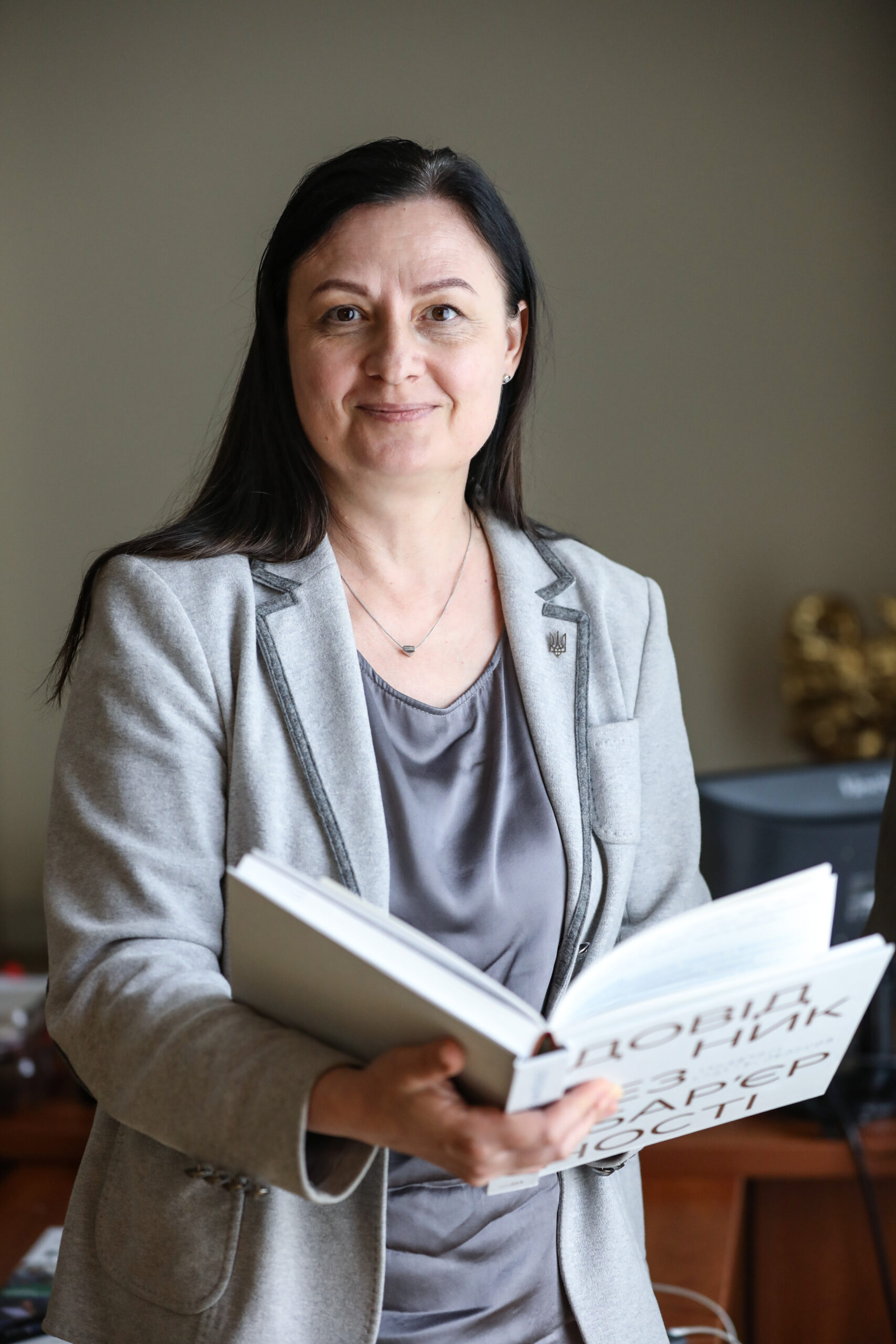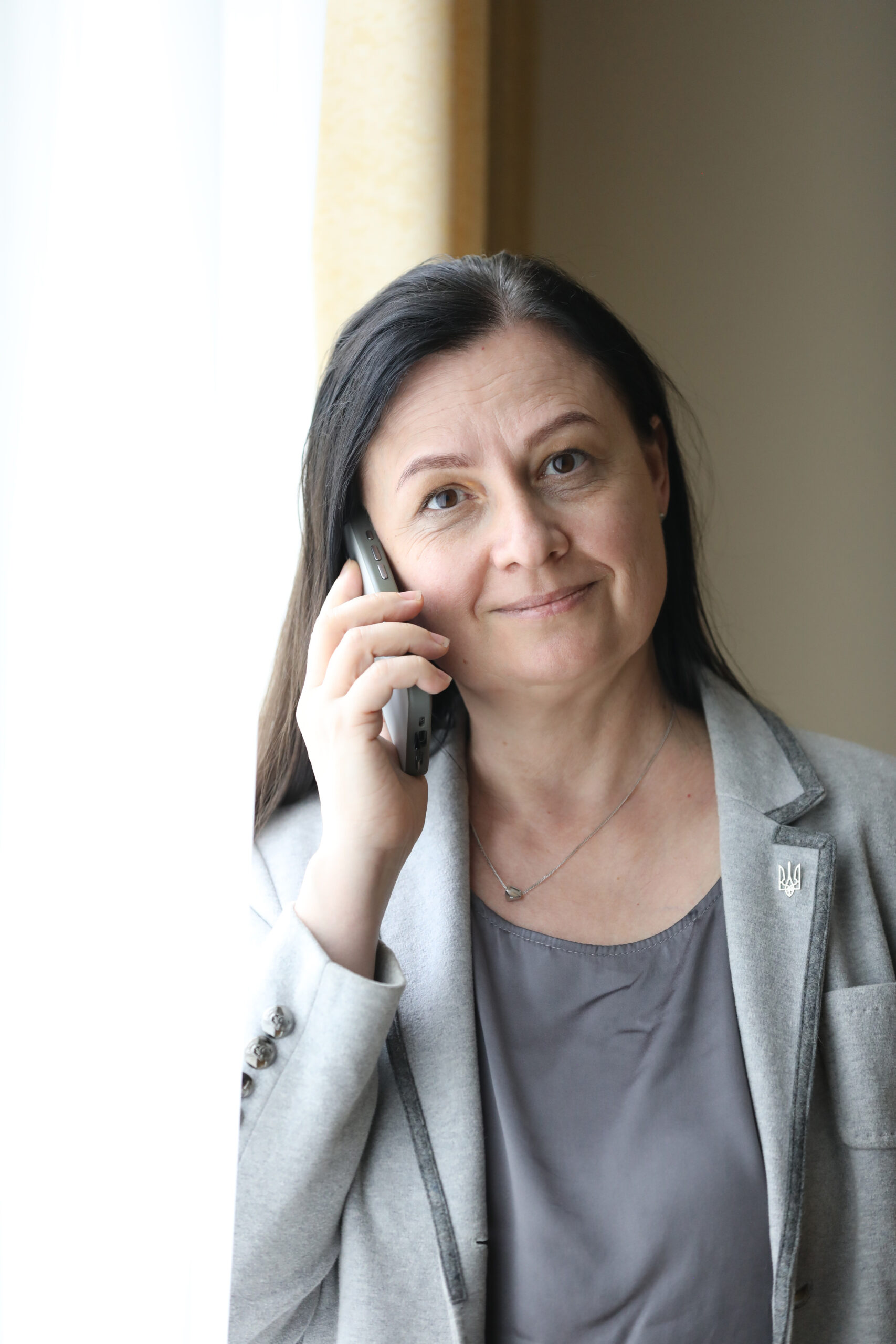
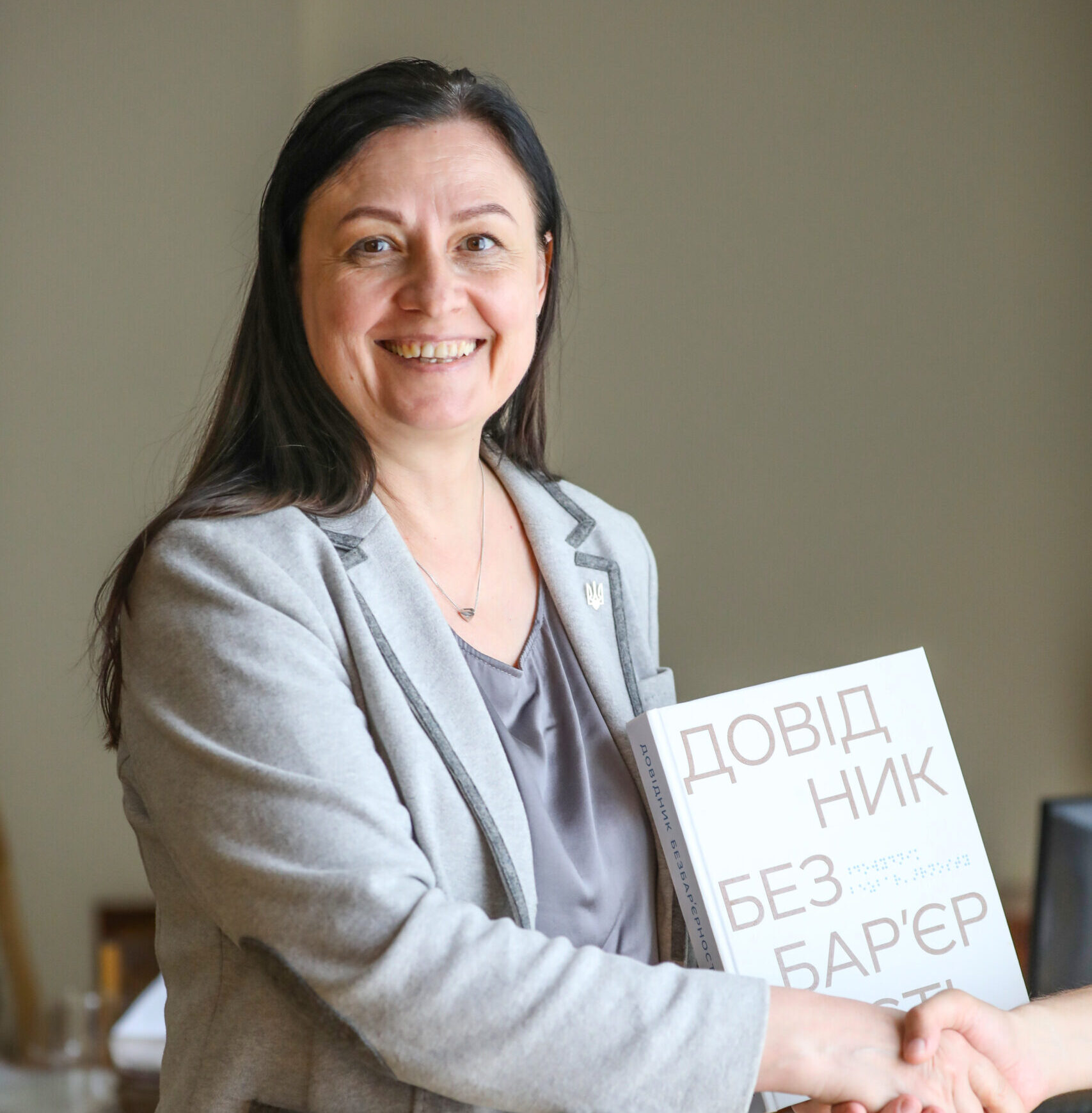
Tetiana Lomakina
Advisor-Presidential Commissioner for Barrier-Free Society Issues
Tetiana Lomakina, together with the Ministry of Health of Ukraine and development partners, is working on the implementation of one of the most significant reforms in the field of rehabilitation in Ukraine. It was during the full-scale war, when the need for high-quality rehabilitation reached unprecedented levels, that the reform gained new momentum.
The Ukrainian government, in collaboration with the WHO, is running training programmes at Сentres of Excellence for rehabilitation specialists; healthcare facilities currently meet modern European standards of care; and rehabilitation is gradually becoming more accessible within communities. Accessibility is when you can. You can move freely, get an education, work and live independently, regardless of disability, injury, age, gender or place of residence.

A barrier-free environment as a state agenda was raised by the First Lady of Ukraine back in 2021. But during the full-scale invasion priorities intensified even more, because barrier-free environment today really concerns everyone who lives in our country.
Right during the war, Ukraine began an important reform in the field of rehabilitation. The International Classification of Functioning, Disability and Health was introduced,which changed the overall view of a person and the foundations. That is, we now have to look at a person not from the point of view of how they cannot move or what impairments they have, but from the point of view of their potential, their possibilities, and what we can do to help this person thrive.
And this has truly set an important course toward active, evidence-based, modern rehabilitation.
Centers of excellence are now being established in collaboration with the World Health Organization.
Today, a barrier-free environment means you can move freely, get an education, communicate on equal terms with everyone, regardless of any impairments, age, gender, characteristic features, life experience.
So this formula of accessibility — “when you can” — it very clearly explains that this is about our desire, about a dream, about what we are building.
Essentially, we must open up opportunities for people. And all our efforts must be focused, on the one hand, on people’s needs, and on the other — on how to remove barriers so that people can do what they want.
The WHO provides extensive expert support for the development of the rehabilitation system in Ukraine.
In addition, there are important monitoring visits during which we not only see where we are falling short, but we see the steps we need to take to develop and improve rehabilitation care.
And we would really like rehabilitation to be provided at a person’s place of residence or stay — right there, in the community where they live.
Currently, indeed, with the support of the WHO, we are working on developing a model.
We understand that this also means that there must be specialists right in every community — without this, we certainly will not move forward.
This is also about the funding system: how can we channel resources from the central level to every community?
If we are talking about rehabilitation — once again — we are developing it at a very fast pace. And this is happening at a time when many people need rehabilitation due to the objective realities of war.
And I believe that the pace at which Ukraine is moving deserves respect.
And we thank both the WHO and the Ministry of Health, and our rehabilitation specialists for being flexible and adapting very quickly, are accepting all this new knowledge and are trying to apply it all to help our people as quickly as possible.
The first rehabilitation teams — I saw how they made equipment for working with patients right from pallets.
So today, at the core, it must first and foremost be a person and a great team that knows how to help.
We must consider that in 5–10 years there will be a new stage in the development of medicine in general.
And I dream that all the most modern technologies that are now being introduced around the world will be available in Ukraine.
Because everything we are doing now is to align our system with all modern approaches, removing these Soviet vestiges from our healthcare system.
And the second — is to bring everything as quickly as possible: all innovations, all solutions, all the best practices to Ukraine.
The Story of Tetiana Lomakina
Tetiana Lomakina is the Adviser and Presidential Commissioner for Barrier-Free Accessibility of Ukraine.
Every day, she works to remove barriers — large and small, obvious and those a person may not even notice. Barriers that can make it harder to study, work, move around, access services, or simply live one’s life.
Accessibility and inclusion became a priority of Ukraine’s state policy as early as 2021. The full-scale war has only intensified the need for systemic change. At the same time, it was during the war that Ukraine launched a major rehabilitation reform: it introduced the International Classification of Functioning, Disability and Health (ICF), which transformed approaches to organising rehabilitation care. Rehabilitation became part of the Medical Guarantees Programme, and the number of multidisciplinary rehabilitation teams continues to grow. Ukraine is supported in this work by international partners, including WHO Ukraine.
For Tetiana, the essence of accessibility and inclusion can be summed up in two words: “when you can” — when you can move freely, access education, and enjoy equal rights and opportunities regardless of health conditions, age, gender, or life circumstances. In her view, the state must simultaneously understand people’s real needs and remove the barriers that prevent them from fulfilling their potential.
One of the key priorities, Tetiana says, is bringing rehabilitation closer to people — to the places where they live.
“We would very much like rehabilitation to be provided where a person lives and stays — right there, in their community,” she explains.
A corresponding model is currently being developed with the support of WHO. Implementing it will require two things: specialists who can work in communities and a funding system that can direct resources from the national level to where people need them most.
Tetiana emphasises that Ukrainian rehabilitation is developing at an extraordinary pace — at a time when, because of the war, an enormous number of people need support today.
“I believe the pace at which Ukraine is moving forward deserves respect,” she says.
She also expresses her gratitude to WHO, the Ministry of Health, and rehabilitation professionals for their flexibility, openness to new knowledge, and readiness to put it into practice quickly.