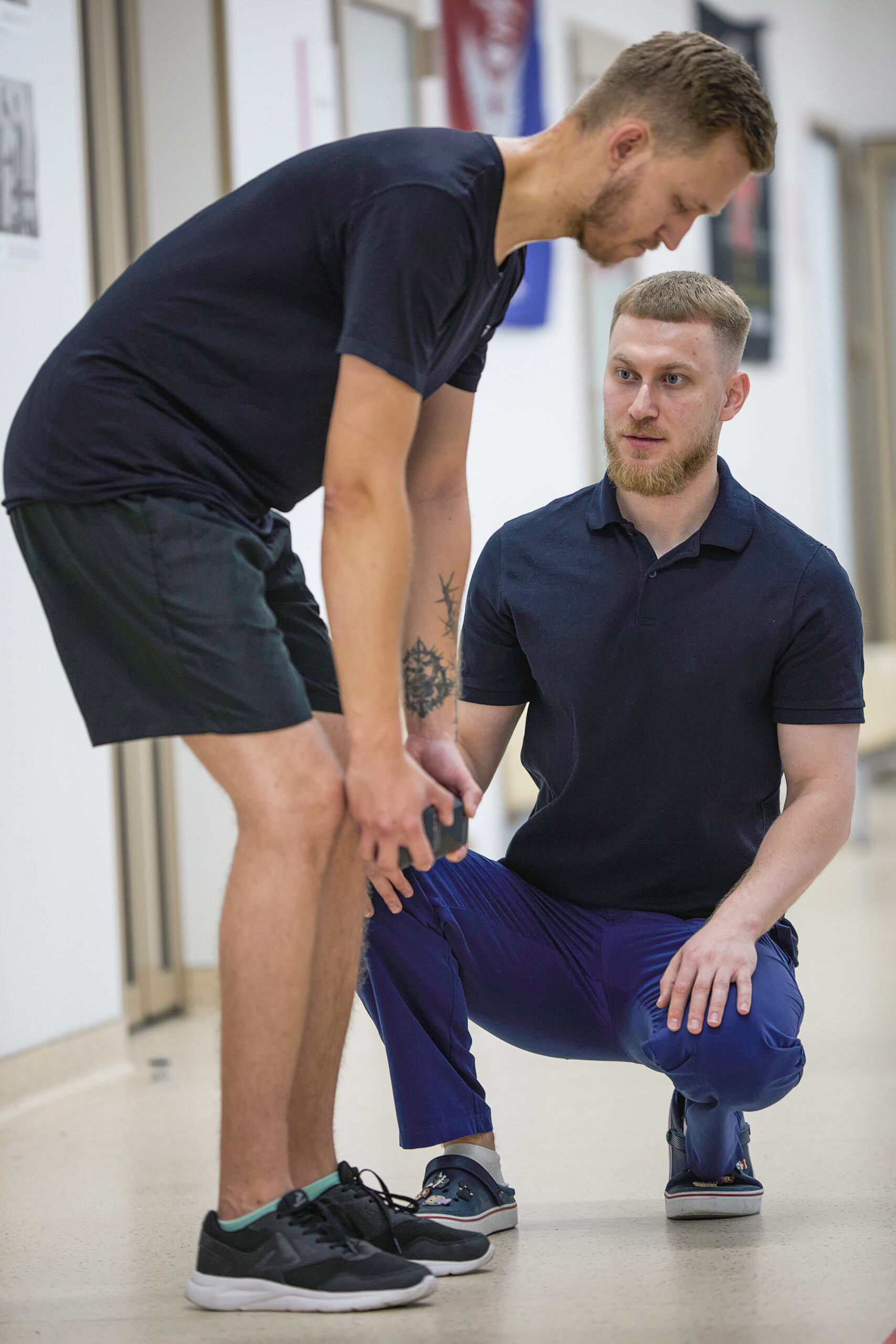
Illia Hrytsiuk
Physical therapist at the Center of Excellence, Dnipro
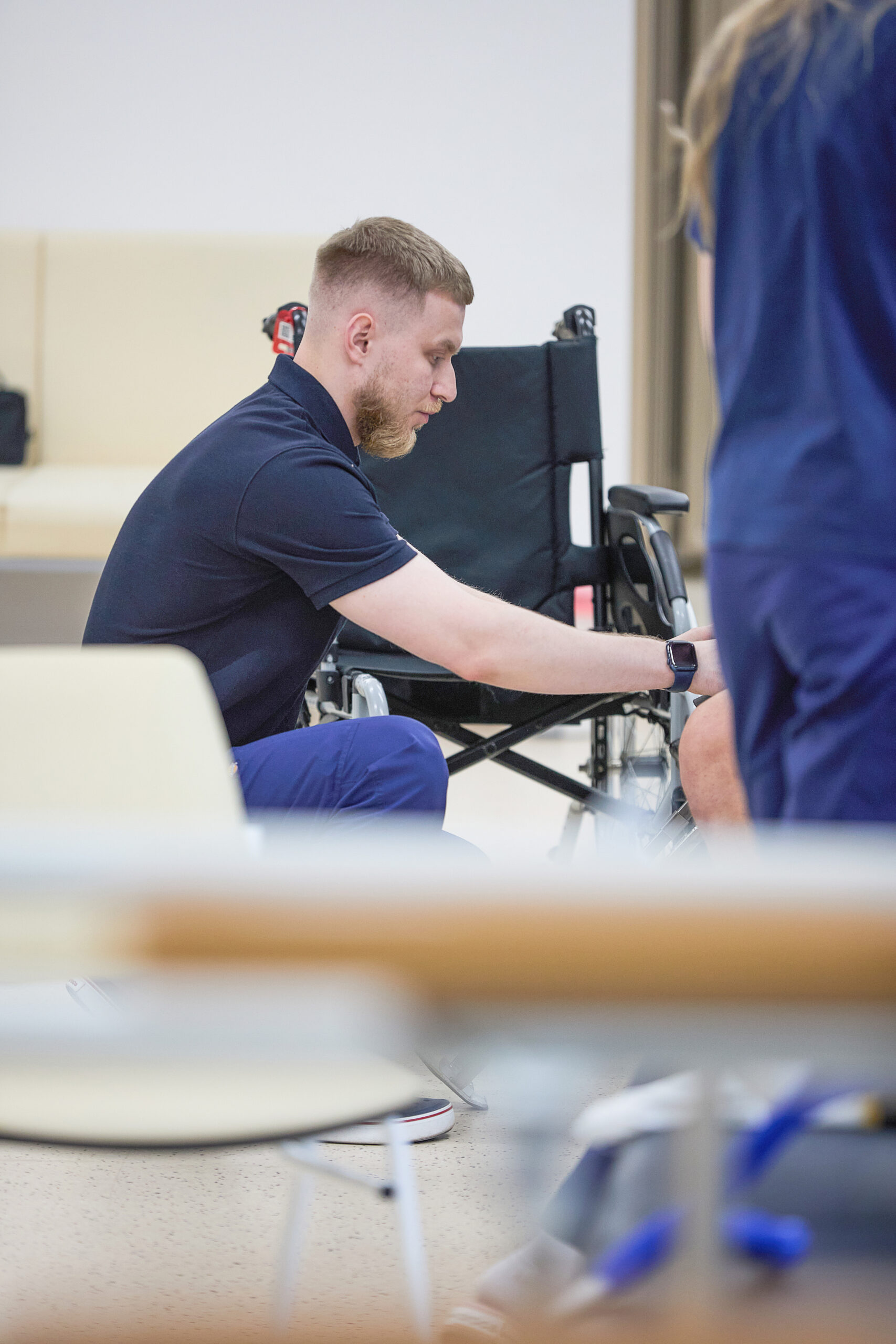
Illia Hrytsiuk believes that only a comprehensive, person-centred approach can help people regain their independence. That is why every patient’s rehabilitation journey begins with an individual rehabilitation plan. For Illia, the greatest reward is seeing a patient who arrived in a wheelchair leave on their own feet. He celebrates every first step, enjoys helping patients run again, and takes great pride in the moment they stand on a prosthetic limb for the first time.

My life was generally connected with sports. I used to practice Taekwondo professionally, and then I decided on something more sports-related, but so that it would be a medical specialty, medicine.
Perhaps it was the second and a half year [of university], when I first came for an internship specifically to those doctors and physical therapists who are now working here.
I saw what real physical therapy is, how it should be — that it’s not just about doing some massages or applying electrophoresis, but exactly what physical therapy is. I am very glad that I ended up in this unit.
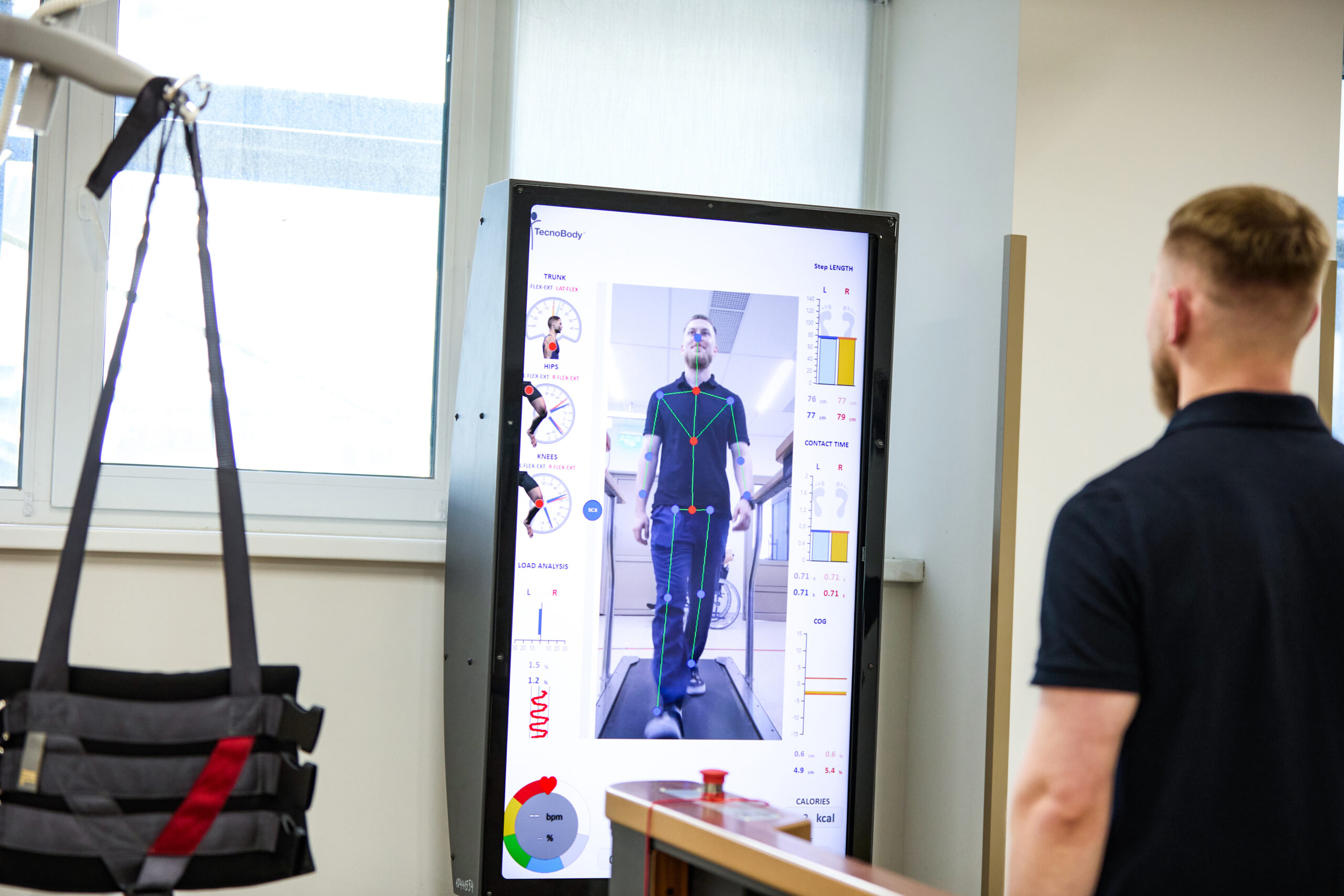
My duties are patient assessment, goal setting, and creating an individual rehabilitation plan.
We work in team — this is a physical and rehabilitation medicine physician, an occupational therapist, a speech and language therapist, and psychologists. Together with this team, we work directly with the patient.
Every patient is individual. I had a patient with whom we worked for almost eight months. I saw how he was still working with our psychologist in the intensive care unit. Then I also started going there and saw all his stages of acceptance — how he couldn’t do anything, he couldn’t even turn to his side.
Now this patient comes to us just to say hello. Sometimes I even call him if some patient is in a serious condition, also with an amputation, so that he can help him morally — because that strength appeared in him when we started walking with him.
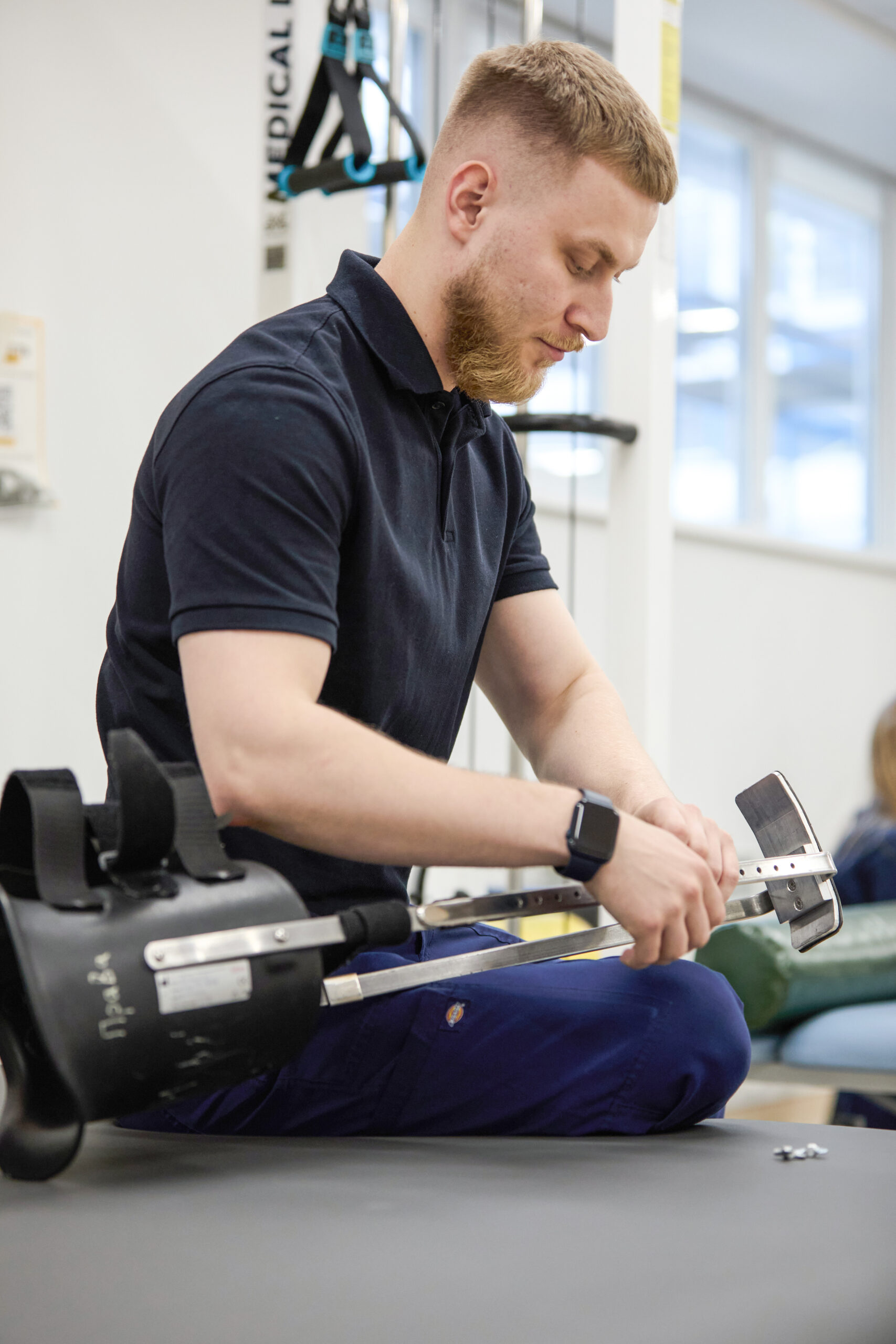
I like my job itself — the fact that I restore people, helping them become a little better, take their first steps, start running or walking with a patient, for example, on prosthetics. In other words, I get a thrill from the patient getting better.
It is a great motivation — to prove to the patient himself that he can do it. And he succeeds: he arrived in a wheelchair, but left on his own limbs.
I am a trainer for the WHO project. Many different teams from various regions of Ukraine come to us, whom we train and pass on the experience we have. I want to continue training people, training different teams, and keep improving in all of this.
The Story of ILLIA HRYTSIUK
Illia Hrytsiuk is a physical therapist, a PhD candidate at the Dnipro State Medical University, and a trainer with a WHO Ukraine project. He works as part of a multidisciplinary rehabilitation team, developing individual recovery plans for patients every day — often for people with amputations and severe injuries.
Illia found his calling while still a student, when he began an internship with physicians and physical therapists:
“I saw what real physical therapy was, what it was supposed to be — that it wasn’t simply giving someone a massage or administering electrophoresis, but understanding what physical therapy truly is. I’m very glad I found my way into this field: from my third year of university, I volunteered here for a year while continuing my studies.”
With the support of WHO Ukraine, standards for the training of physical therapy professionals and the quality of rehabilitation care are being developed. These standards provide a framework for multidisciplinary practice — from the assessment of a patient’s condition by a Physical and Rehabilitation Medicine physician to involving an occupational therapist, psychologist, and speech and language therapist. Today, Illia is a trainer with the WHO project: teams of specialists from different regions of Ukraine come to train with him, and he shares his knowledge and practical experience with them.
One of the patients Illia remembers most vividly was a man with complex injuries whose rehabilitation lasted almost eight months. He had undergone an amputation of one limb and sustained a femoral fracture in the other leg. Illia supported him throughout every stage of his recovery — from the first days, when the patient could not even turn onto his side independently, to the point when he began walking again. Today, the man sometimes simply drops by the rehabilitation centre to say hello. At times, Illia also asks him to support other patients with complex injuries — through his own example and simply by being there.
Despite his emotional involvement, Illia consciously maintains professional boundaries:
“It is very important to establish boundaries between yourself and the patient — not to bring in too much empathy or personal attachment, because then the whole framework of ‘I am the therapist, the patient is the patient’ begins to break down, and the patient no longer becomes a friend.”
According to Illia, maintaining this professional distance helps him cope with the emotional demands of the work while making the moments when he sees tangible progress all the more meaningful — for example, when someone who arrived in a wheelchair eventually begins walking independently.
In the near future, Illia plans to complete and defend his PhD thesis and then continue moving forward: training new teams of specialists and continuing to develop his expertise in rehabilitation.